
This week a jury convicted Russell Brand of rape and sexual assault. Women’s lives have been terribly harmed, and a court of law has now found it so. Any Christian response must start with them.
But this is more than just another celebrity whose crimes have been exposed. Brand publicly professed Christian faith and ostentatiously paraded this faith through the media. Some within the church were quick to want to be associated with a celebrity so willing to talk openly about following Jesus.
These are three thoughts – all based on learning I have shared before on Grace + Truth:
1. Celebrity is a virus
Alcoholics Anonymous (AA) has always wisely refused to have celebrity endorsers. It knows that anchoring the life-saving concept of recovery to an individual is dangerous because of our human frailty. Fame increases these vulnerabilities.
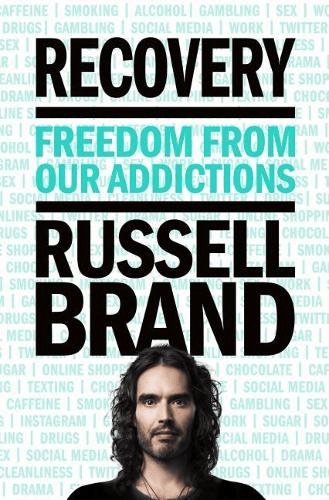
Russell Brand’s book Recovery: Freedom from our Addictions ignores all this.
As ever, the Church could learn a lot from the wisdom and practice of AA. Often the Church loves association with someone famous, as if God’s cause needs the stardust of celebrity. Time and again, we prize charisma over character and build ministries on someone’s ability to inspire and entertain.
Too often, our eyes light up at the lure of fame, rather than appreciating its dangers. We need to take more seriously what the bible describes as ‘the cravings of sinful man, the lust of his eyes, and the boasting of what he has and does’ (1 John 2:16).
2. Grace must contain truth
In his book, The Cost of Discipleship, Dietrich Bonhoeffer wrote :
“Cheap grace is grace without discipleship, grace without the cross, grace without Jesus Christ, living and incarnate…Cheap grace is the deadly enemy of our Church. We are fighting today for costly grace.”
Cheap grace demands nothing and easily becomes the enemy of justice and righteousness. As we have seen in so many safeguarding scandals, it fails the people who have been harmed by side-lining what they have experienced. It also fails the one who is ‘forgiven’ because it asks so little of them.
Nobody is beyond God’s grace and mercy. But true mercy never means minimising what was done, ignoring victims, or shielding the guilty from consequences. And it certainly never means treating those who bring harm to light as the problem.
In contrast, true grace provides resources for authentic transformation.
Consider Zacchaeus, who like Brand, was wealthy, powerful and controversial. His encounter with Jesus was not just a spiritual or intellectual change, but it led him to give away half of what he owned and repay those he had cheated four times over. The truth of his salvation was seen and felt by his community. Grace was not earned by his repayment, but it was tangible evidence of its authenticity.
Truth must never be seen as the enemy of grace. In fact, it is the key ingredient that keeps grace from being cheapened. A tree is known by its fruit, and faith without deeds is dead.
3. Go deep not shallow
Richard Foster wrote that “superficiality is the curse of our age”. This is a real danger for the church too. Christian culture is corrupted when it becomes about platforms, profile and power. Real transformation is slow and tends to happen away from the cameras.
Andy Flannagan sang that our culture is “drowning in the shallow.” Individually and collectively, the church needs to push out from the shallows and venture into deeper waters.
The sign of God’s redemptive action in history is not a magic wand which erases sin, but a cross on which His son suffered and died. Like someone dredging out all the crap and gunk from a blocked drain, God acted to cleanse our polluted world and our broken lives. He addressed the worst the world could do, got to the root of it.
And Jesus tells his followers to pick up their crosses if they are to follow him.
Personally, I have found praying for those I harbour resentment towards, or who I know hold grudges against me, to be profoundly important. This has altered my actions and led me to apologise to numerous people.
How can we avoid settling for a shallow form of grace that skims the surface and go deeper to address the roots of bitterness we carry?
Where this leaves us
First, let’s pray for those harmed, and make sure our churches are places where the vulnerable and hurt are believed and cared for. Let us support the vital work of charities like Restored who work against violence against women.
Secondly, let us examine where we’ve valued the shallow over the deep, the famous over the faithful and charisma over character. Let’s not build our church, organisations, families or relationships on the sinking sand of cheap grace.
Thirdly, let’s make our church gatherings more meaningful by upholding moral truth, as well as proclaiming theological truth. Let’s move beyond small talk, deal in reality and address what really matters. Let us pray for those we dislike, and before we take communion make peace with those we resent.
May the grace of God comfort those harmed by the crimes of others. And may this grace lead us to live in truth.
Check out the work of Restored whose mission is to speak up about the realities of violence against women and girls, equip the Church to stand against domestic abuse and support survivors. Their CEO, Bekah Legg wrote this: » The Brand Case: the perpetuation of myths, and the challenge to the Church
Discover more from Grace + Truth
Subscribe to get the latest posts sent to your email.


Thank you for this. I am endeavouring to pray for Russell Brand and his wife and especially his children (who will be very vulnerable) each day.
LikeLiked by 1 person
thanks Pat – time spent praying is never wasted.
LikeLike
Thanks for this it reminds me of something often said about responsibility … Becoming Christian down not mean that you don’t have a responsibility for your actions and their impacts on others. Even for those things you may have done before coming to faith.
LikeLike
100%. Grace becomes an ethical nightmare if seen as purely a ‘get out of jail free’ card. It is outrageous and mind-blowing that everyone can be forgiven and this is what is so incredible about grace. But – like the prodigal son – we need to face truth, accept what we have done and humbly return. We cannot receive the embrace of grace without embracing truth.
LikeLike
Thank you for a great piece. You’ve said much of what I was talking to my husband about over breakfast this morning. It’s almost like you were listening in.
LikeLike
It proves that the new function I have on the blog – to listen into regular commentator’s breakfast conversations – actually works!
LikeLike
Well I am more than pleased to prove it works. Long may this continue
LikeLike
haha! ‘Deep tech’!
LikeLiked by 1 person
LOL!! 🙂
LikeLike
A sad case in so many ways—the obvious one of the ongoing suffering of the victims (never to be minimised) but also the sadness of Brand’s family and close friends,, the ones who stood beside him, believed him. Then there is the sadness of the Christian community. To have this self-appointed spokesperson behave in such un-Christian-like ways (not just the acts themselves, but the subsequent denials and the refusal to own the behaviour, make amends, and seek forgiveness).
We all make mistakes, or engage in wrong-doing—addicts and alcoholics no doubt far more, and far worse than more balanced folk. The only redemption comes from God, and only through the making of direct amends wherever possible. The serious recovering person will make such amends even if the likely outcome is prosecution and prison. At least they go with a rested conscience. Denial—which inevitably is coupled with blame and counter-accusations—only ever makes an already unwell person sicker still. It is a downward spiral. I know. I have experienced it. Until I discovered the 12-step program, I was locked in to my own denial. Today, I am able to engage in, as you so elegantly express it,
“…praying for those I harbour resentment towards, or who I know hold grudges against me, to be profoundly important. This has altered my actions and led me to apologise to numerous people.”
I pray for Russel Brand—I pray he is released from the bondage of self, probably the worst prison of all.
LikeLiked by 1 person
thanks so much Tobias – especially for sharing your personal experience. It is terribly sad – and its important to pray for everyone affected – the victims, and for RB’s family and children, and for him too. May God have mercy.
LikeLike
Many thanks for your reflection this week, Jon. I have found the news to be quite depressing with the constant going over of Russell Brand’s criminal actions. The grace he has received now needs to be put into practice by actions not just words and these are not to be broadcast. I was reminded of John Profumo who after his political life came to an end, worked quietly as a volunteer for the homeless for many years. I knew nothing of his work until after he died.
LikeLiked by 1 person
Thanks. Yes, John Profumo’s example is interesting. He worked for many years with Toynbee Hall, the settlement in the East End of London which has a lot of Oxbridge and upper class connections and has done a huge amount of great work in that community. My wife worked there in the early 2000s and met him. The legend that Profumo went ‘and cleaned toilets at Toynbee Hall’ became well known as a story of redemption – but you are right that he did his work quietly and therefore earnt a good amount of respect.
LikeLiked by 1 person