Dear Lord and Father of Mankind has been my favourite hymn for a long time. 25 years ago, my wife and I chose to sing it at our wedding. At the time, my Mum did question whether singing the words ‘forgive our foolish ways’ immediately after saying our vows was a good idea, but we went for it anyway.
As well as its beautiful melody, its words contain a generous form of challenge: grace-filled words of deep truth. It conveys so much so succinctly: the simple faith of Jesus’ first followers, poetic description of God’s incarnation in Christ, and our need of his calm within the strain and stress of our lives.
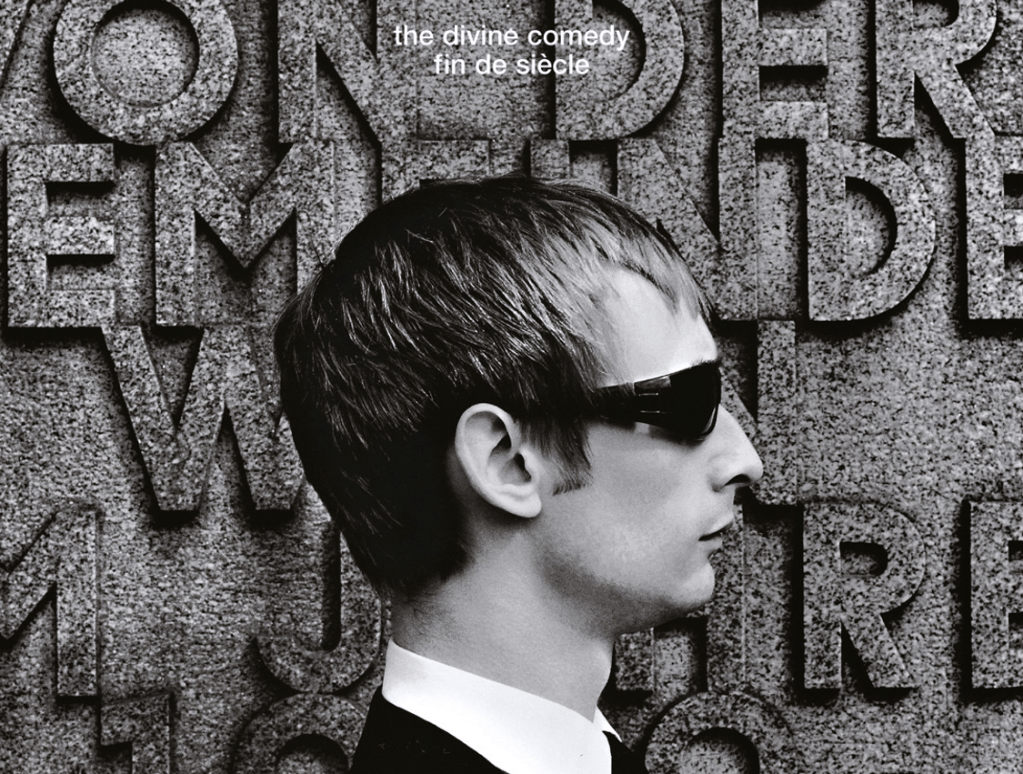
I wanted to highlight the lines within it which have been most important to me, as well as encourage people to listen to my favourite version of my favourite hymn, by the band The Divine Comedy. Neil Hannon somehow sings the words with both rich humanity and epic flourish. Check it out as you read:
‘Our rightful mind‘
Dear Lord and Father of mankind,
forgive our foolish ways!
Re-clothe us in our rightful mind,
in purer lives thy service find,
in deeper reverence, praise;
in deeper reverence, praise.
I love the metaphor of being ‘re-clothed in our rightful mind’ because of how readily we become distracted and befuddled by the demands of life. Jesus speaks of how “the worries of this life, the deceitfulness of wealth and the desires for other things” choke us and make us unfruitful (Mark 4:19).
Our service to God easily becomes entangled in our foolish distractions: I know how regularly I need to purge myself of resentments and seek to purify my motivations.
‘In simple trust‘
In simple trust like theirs who heard,
beside the Syrian sea,
the gracious calling of the Lord,
let us, like them, without a word,
rise up and follow thee;
rise up and follow thee.
‘Simple trust’ is a great description of faith. We can make it complicated, enter into deep theological and ecclesiological debate and argue about church politics, but at the centre of the Christian faith is the question ‘Will we follow Jesus?’
Like those Galilean fishermen, no doubt grappling with plenty of struggles of their own, will we lay down our security, rise up in trust and follow him into the unknown?
‘The silence of eternity‘
O Sabbath rest by Galilee!
O calm of hills above,
where Jesus knelt to share with thee
the silence of eternity
interpreted by love!
interpreted by love!
No one knows for sure what is beyond this life: at best we have signposts into the mist. We have a longing for eternity etched in our hearts but much is mystery.
But what we can know – through faith – is that Jesus reveals God. He shared with us this ‘silence of eternity’ in his very life. “For God so loved the world that he sent his only son” (John 3:16). In Christ, God was incarnated into human history: mystery took flesh, and ultimate truth is ‘interpreted by love’.
‘ordered lives’
Drop thy still dews of quietness,
till all our strivings cease;
take from our souls the strain and stress,
and let our ordered lives confess
the beauty of thy peace;
the beauty of thy peace.
Many of us urgently need ‘still dews of quietness’ to address the strains and stresses which beleaguer our souls. We cannot be disciples without discipline: to stop and truly listen to Jesus’ words “Come to me, all you who are weary and burdened, and I will give you rest” (Matthew 11:28).
To do this requires order. This is not just about a well-managed inbox or a tidy desk – it is about making time to be with Jesus every day: to experience the beauty of his peace before our strivings overcome us.
‘The heats of our desire’
Breathe through the heats of our desire
thy coolness and thy balm;
let sense be dumb, let flesh retire;
speak through the earthquake, wind, and fire,
O still, small voice of calm;
O still, small voice of calm.
We are created with God-given passions and ambitions. Sensuality and desire to achieve are not bad things that simply need to be repressed. But they do need restraint. We need the coolness of divine grace as a balm which repairs, renews and reorders our passions.
God can move with the dramatic power of earth-shattering events – but also with the still small voice of calm. Let us remember how Jesus, with just a word, calmed both the stormy Syrian sea and the panic of his followers. Let it be so for us.
Dear Lord and Father of Mankind, forgive our foolish ways. And re-clothe us in our rightful mind. Amen.
Discover more from Grace + Truth
Subscribe to get the latest posts sent to your email.


Very helpful and thoughtful reflections on this beautiful hymn. Thank you, Jon.
LikeLike
Thanks Graham! I really appreciate your long-running encouragement!
LikeLike
I like the line ‘re-clothe us in our rightful mind’ which reminds me of the story of the man demonised by a legion of spirits who roamed naked among the tombs, self-harming and being violent. After an encounter with Jesus he is seen sitting down with Jesus, ‘clothed and in his right mind.’
LikeLike
yes – of course – I had not made that connection. thanks!
LikeLike
When I play this hymn in Church on the piano, I really try to express the words, as the congregation sing. Thanks for your lovely reflections on it! I don’t really think you had ‘foolish ways’ saying your wedding vows!
LikeLike
Haha! I didn’t say you thought we were foolish to make the vows! You just questioned the order of service and when we sung that hymn!
LikeLike
I agree. It is a classic. I believe it was a originally a bit of a quaker rant against the shallow noisiness of American revivalism. But it is a carefully considered polemic which has triggered millions of us to consider the peacefulness and joy of God Himself. The tune we sing it to is called (I think) “Repton” and that phrasing fits so perfectly even though it was repurposed to fit the hymn.
LikeLike
Thanks – yes a few people have pointed me to its origins and it looks interesting. Not that anyone would want to rant at American revivalism anymore (ahem…)
LikeLike
There is another verse which goes between “O sabbath rest …” and “Drop thy still dews …”
With that deep hush subduing all our words and works that drown the tender whisper of your call, as noiseless let your blessing fall as fell your manna down, as fell your manna down.
By a nice coincidence Timothy Dudley-Smith wrote words based on Psalm 16 which are in the same vein and are set to the same tune REPTON
Lord, when the storms of life arise, be near to keep me yet, my chosen portion and my prize in whom alone my refuge lies, on whom my hope is set, on whom my hope is set.
In God alone securely stand his saints for ever blessed, who shelter safe beneath his hand as in a fair and pleasant land, and in his presence rest, and in his presence rest.
Lord of our life, our strength and stay, whom yet unseen we love, uphold us in the narrow way and guide our footsteps night and day with wisdom from above, with wisdom from above.
So shall the path of life be shown, the prayers of faith ascend; until we know as we are known, and sing before the Father’s throne the songs that never end, the songs that never end.
>
LikeLike