
Read part 1: Resisting ‘Christian’ nationalism & secular progressivism – by Bruce Nadin
In my last article I argued that we are all being discipled by something, and that the primary place of Christian formation isn’t our social media feed but the life of the body of Christ.
But what does that actually look like?
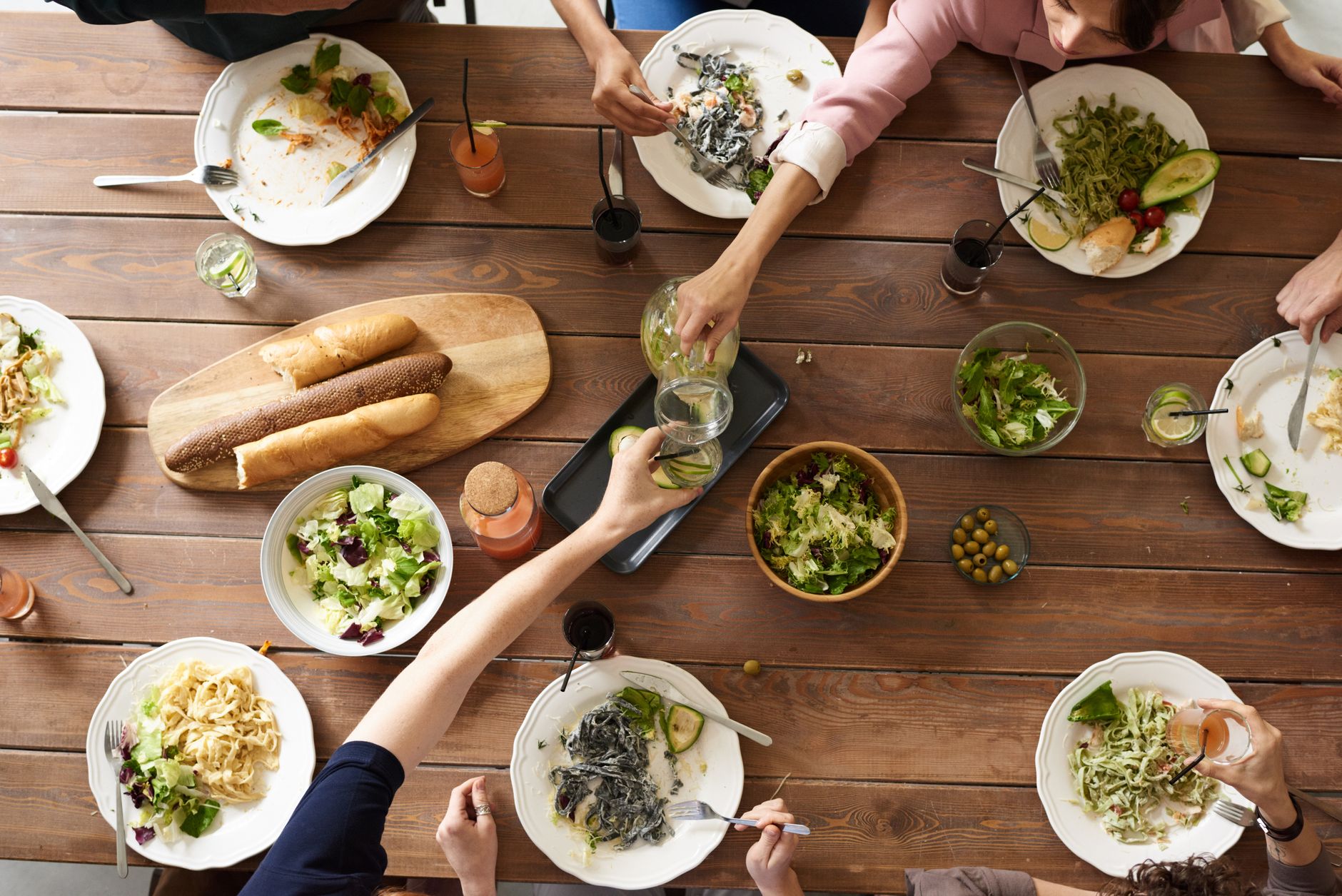
Well, mostly, it looks like dinner. It looks like diverse people eating together, sharing a table and doing life together.
Sharing a table
During our sixteen years in South Africa, I encountered churches where people from different cultures and ethnicities worshipped together every Sunday. Given the country’s deeply racialised history, it was wonderful to witness. And yet I sometimes wondered whether it was enough.
Early in our time there I remember thinking: it isn’t enough to share a pew if we don’t share a braai.
In South Africa a braai – essentially a better version of a BBQ – is something of a national institution. In a nation still wrestling with the trauma of its past, there are few things more capable of bringing people together than cooking meat, lots of it, over an open fire.
But the real significance of a braai is the same as the significance of any shared table. It is what happens around it. People eat, talk, laugh, tell stories and, most importantly, share life.
Sitting in a church pew or chair once a week asks almost nothing of us. We can share a church building with someone for years and never discover what they are afraid of, what they have survived, or why they see the world so differently from us. A table is where that changes.
Love of the stranger
Philoxenia is a beautiful Greek word which our Bibles translate as hospitality: It is a compound of philo, meaning love or affection, and xenos, meaning stranger or foreigner. Literally, it means ‘love of the stranger’.
It is the exact opposite of xenophobia – fear or hatred of the stranger. That contrast feels particularly vital in the world we currently inhabit.
Which is why there is nothing soft or sentimental about the concept of hospitality. In our increasingly polarised culture, its a practical form of resistance to the rising fear and suspicion that threatens our country.
40 Days of Hospitality
The church I serve, Streatham Baptist, is about to embark on a six-week journey we are calling 40 Days of Hospitality.
It is more than a teaching series. Our Sunday sermons, our children’s and youth teaching, our Life Groups and a newly published 40-day devotional will all explore the same theme. Every bit of the content has been created in-house by members of our own church community – an opportunity for people across the generations to contribute their creativity, wisdom and experience to something we can explore together.
The point is to move hospitality beyond something we talk about and make it something we practice. In our homes, around our tables, in the ordinary rhythms of everyday life.
The gospel makes room
Hospitality isn’t just a nice idea we have bolted onto the gospel. Hospitality runs right through Scripture, because it reveals a God who makes room, a Father who runs towards to welcome those who are lost, a Saviour who shares meals with outsiders, and a Spirit who creates a beautifully diverse community.
In Ephesians 2, Paul describes how Christ has broken down the dividing wall of hostility. Those who were once strangers have been brought near and made members of God’s household. The gospel doesn’t simply reconcile individuals to God, it creates a new family.
Tim Chester, in his brilliant little book A Meal with Jesus, observes that the purpose of Jesus’ mission was to serve and to save – but that his primary method was remarkably ordinary: eating and drinking. Read Luke’s Gospel and Jesus seems almost constantly to be going to a meal, at a meal, or coming from one.
Perhaps we make Christian mission more complicated than it needs to be?
Making room in a lonely city
In a city like London this isn’t optional. We live among millions of people, yet loneliness is one of the defining afflictions of our age, and research suggests it falls most heavily on the young. We can be constantly connected digitally whilst becoming increasingly disconnected relationally.
The church is called to live differently. Open tables, open homes, open schedules and open hearts.
That won’t look the same for everyone, and hospitality isn’t another Christian obligation to feel guilty about. For some it might be a meal; for others a coffee, a walk, an invitation, or simply making time for someone who might otherwise be overlooked. As Rosaria Butterfield puts it,
‘Hospitality is turning strangers into neighbours and neighbours into family.’
The invitation is simply to make room.
At Streatham Baptist Church we are a multi-ethnic church family, so this is something we have the privilege of reflecting in a particular way. When we share life across the boundaries that so easily divide us, we catch a glimpse of God’s kingdom.
In a lonely and divided world, perhaps one of the simplest ways to embody the gospel is to pull up another chair and say:
‘There’s room for you here.’
Bruce Nadin is Senior Pastor of Streatham Baptist Church, South London. This is the second of two blog posts about how local churches can build community to overcome polarisation and division.
Recommended books: A Meal With Jesus by Tim Chester & The Gospel Comes With a House Key by Rosaria Butterfield
Discover more from Grace + Truth
Subscribe to get the latest posts sent to your email.


Bruce, we have never met, but like you, my 10 year sojourn in South Africa was instrumental in how I thought about hospitality, meal preparation and the extended fellowship impossible to avoid at a braai. From Afrikaans farmers to township pastors to community living (encountering a bloodied sheepskin common to both the first of those two), I miss it and long to.emulate it every day.
LikeLike