
We are all being formed by the culture around us. By the news we consume, the social media we scroll, the podcasts we listen to, the voices we give our attention to. And our algorithms are remarkably good at giving us more of what we already think.
They build echo chambers where our assumptions are endlessly reinforced and where people who see the world differently slowly stop being neighbours and start being the enemy.
The danger is that this happens to us without our noticing. Nobody decides to be discipled by their feed. We can be deeply formed by our culture and our media consumption whilst assuming we are the ones doing the thinking.
Claiming to represent Jesus
And as a pastor, here is what concerns me most. Increasingly, I see secular progressivism on one side and right-wing nationalism on the other being baptised and affirmed by voices claiming to represent the way of Jesus.
The gospel is being recruited. Its language is borrowed, its authority is annexed, and it is sent out to fight for a side. But the kingdom of God is not the chaplaincy wing of anybody’s movement. Jesus is nobody’s mascot.
Both temptations work the same way: they ask us to surrender one half of the gospel to keep the other. Left-wing progressivism offers us a form of grace with the truth quietly filed off. Right wing nationalism offers aspects of truth with the grace stripped out.
Radical grace and truth
Either way we end up with something manageable, tribal and useful in an argument. But we are left with something that does not look like Jesus, who came full of grace and truth.
We need to resist the temptation to lean into either extreme. Instead, we need to lean into the radical grace and radical truth of the kingdom of God.
The beautiful picture of the early church in Acts 2 gives us a different way to follow:
“They devoted themselves to the apostles’ teaching and to fellowship, to the breaking of bread and to prayer.” (Acts 2:42)
Sharing lives
The bible goes out of its way to show how multi-ethnic the early church was. And this mosaic of diversity did meet in the temple, but they also broke bread in their homes. They ate together, prayed together, learned together, shared their lives.
There is something vitally important here about how discipleship actually happens – about how we learn to practise the Way of Jesus. Because the truth is, we are all being discipled by something.
The primary place of Christian formation isn’t our social media feed. It’s the life of the body of Christ.
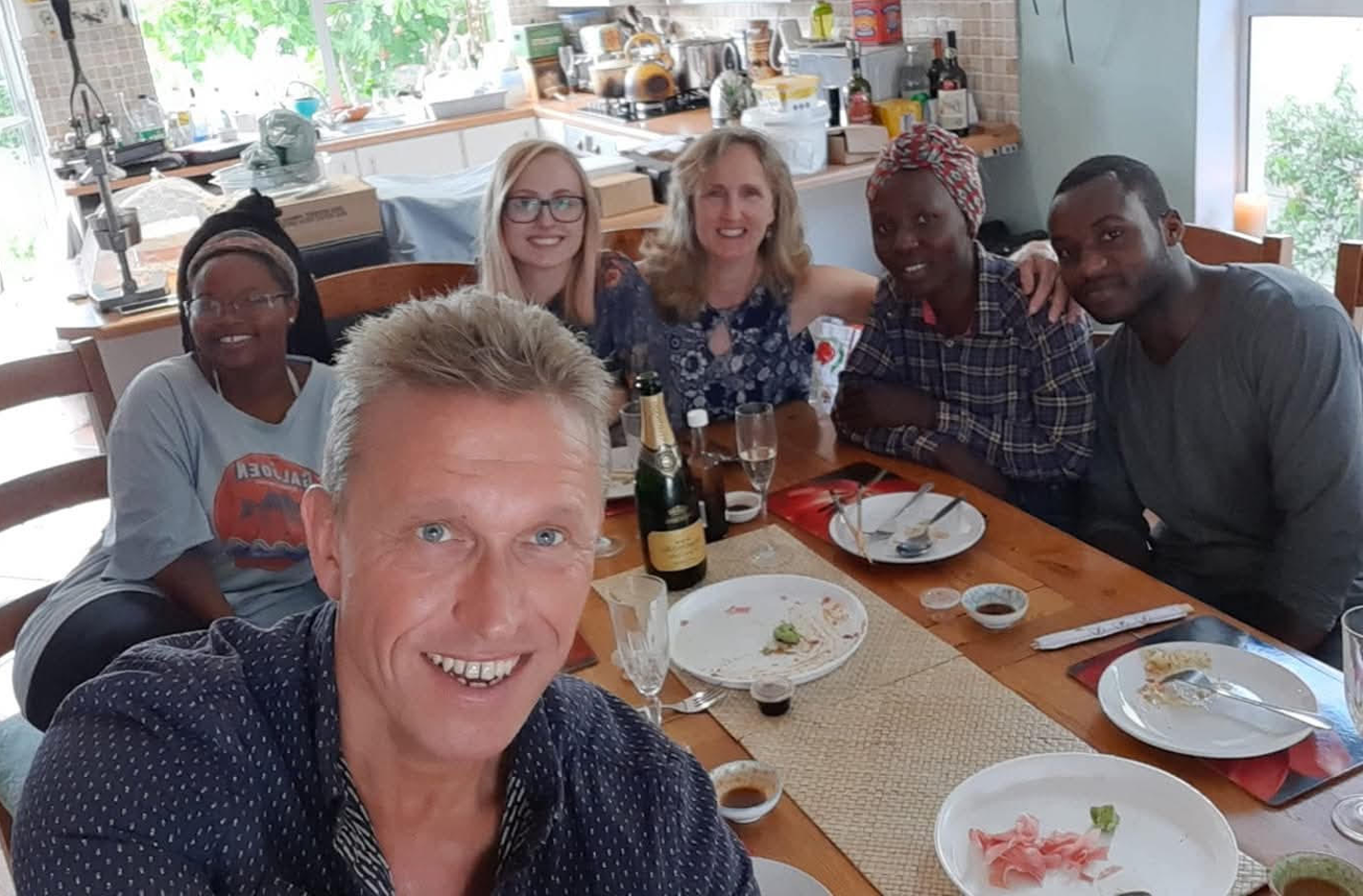
It’s breaking bread together and breaking open the Word of God together. It’s praying together. Reading the Bible together. Opening our homes. Sharing our lives. Serving alongside others. Listening to people who don’t necessarily see things the way we do.
Beyond our own tribe
During our 16 years in South Africa, my wife Louise and I learnt this: we can’t be fully discipled by our own tribe. Sometimes the Christian who comes from a different culture, generation or background sees something we don’t – and God uses them to challenge and enlarge our understanding.
Their story exposes our blind spots. Their experience reveals dimensions of God’s grace we would otherwise have missed entirely.
This is why retreating into our tribes is so costly. It isn’t simply unwise or unfriendly. It results in our witness being diluted, our mission compromised and our discipleship weakened. Tribalism destroys authentic faith.
Not moderate, vague or silent
But let’s remember the radicalism of the kingdom of God which Jesus spoke about.
Resisting the culture wars is not about being moderate, vague, or carefully silent on everything that matters. It is not a call to occupy the sensible middle and hope nobody asks us anything. It is not about being a non-committal ‘centrist Dad’.
It is a call to be formed by a different authority altogether: the authority of Jesus and to follow his way and then to live among people who will not let us stay comfortable.
What is shaping me?
So the question I keep coming back to is a simple one, and I would encourage you to sit with it rather than answer it too quickly:
Who, or what, is discipling me?
Am I allowing the Word of God, and the people of God, to shape me more deeply than the culture around me?
When we share life, share meals, pray together and open God’s Word together, we can become a people formed together in the likeness of Christ. Committing to practising the way of Jesus is the most disruptive and transformative thing we can do in our conflicted and fractured world.
Bruce Nadin is Senior Pastor of Streatham Baptist Church, South London. This is the first of two blog posts about how local diverse churches can build community to overcome polarisation and division. Read part 2: It’s not enough to share a pew, if we don’t share a table
Discover more from Grace + Truth
Subscribe to get the latest posts sent to your email.


Reading the Bible can be an echo chamber too, as can “fellowship”. As can hearing the same style and preaching content. Now, I’m evangelical, “charismatic”, New Church, but I’ll deliberately listen to, say, the Nomad podcast too, so my certainties can be disturbed, reviewed or confirmed.
LikeLike
Its a good practice Noel. Like reading a different newspaper or news website – we all need our views ‘disturbed, reviewed or confirmed’ regularly!
LikeLike