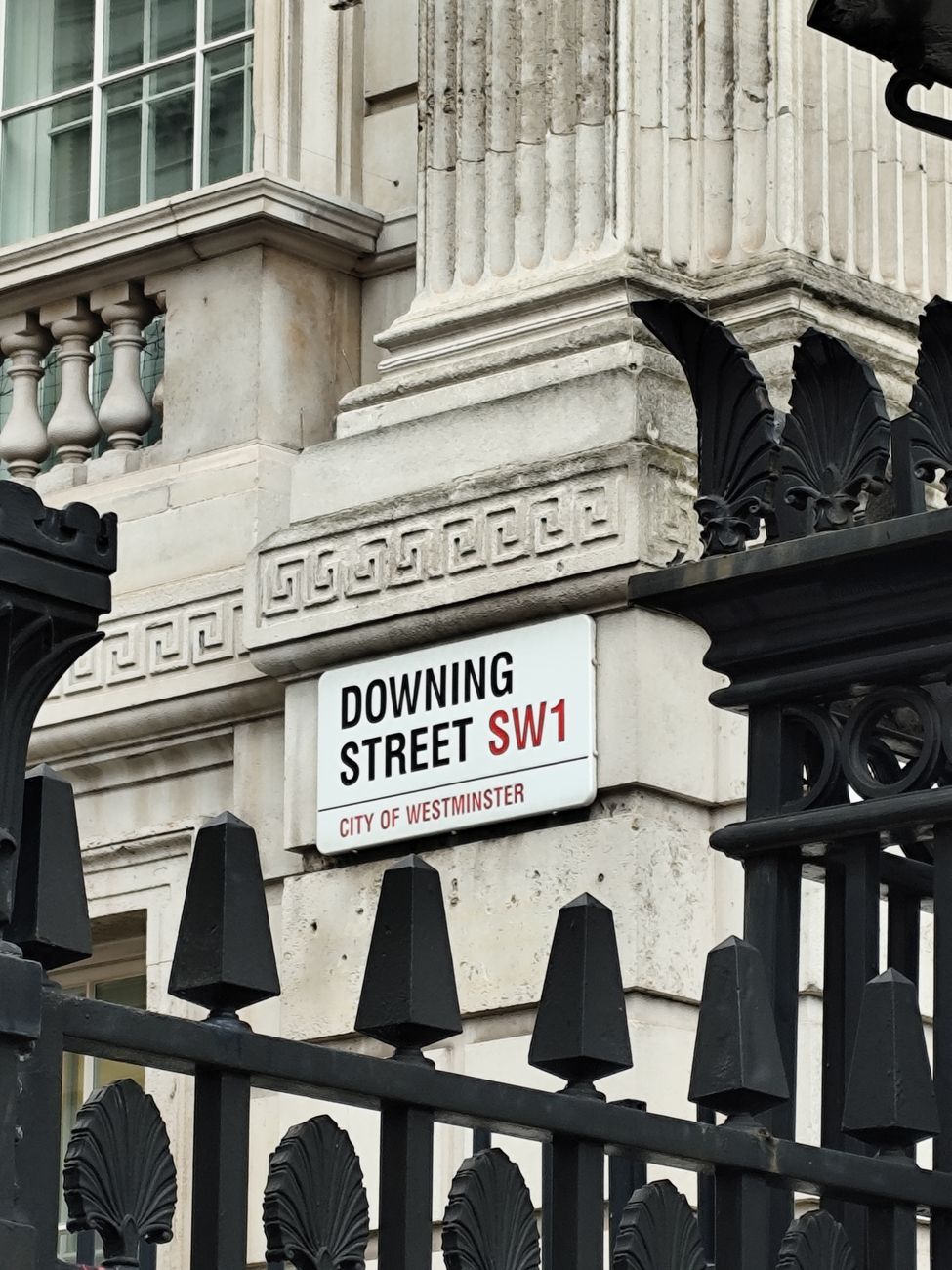
Andy Burnham could not have been any clearer about his priorities in his first few hours as the UK’s new Prime Minister. On his first morning as PM he visited The Passage, a homeless charity in Westminster, and then announced from the steps of No10:
“I will soon go through that door behind me and issue my first instruction: to end rough sleeping in our country”
It’s a bold statement of intent which shows how politically potent the problem of visible homelessness is. And minutes after he walked back through that door, the government announced £340m of new funding to tackle rough sleeping.
Similar pledges
Over recent decades, I have seen many Prime Ministers and politicians make similar promises.
In 1990, Margaret Thatcher launched the first Rough Sleepers Initiative, investing £96m ‘to make it unnecessary for anyone to sleep rough in London’. My university dissertation was on this initiative, and my first job was in a south London hostel funded by it.
In 1999, Tony Blair established a Rough Sleepers Unit, led by Louise Casey, and gave her the target of reducing rough sleeping by two-thirds by 2002. During this period, I managed an emergency shelter in Soho that it funded, and Casey and many politicians were frequent visitors.
In 2011, as London Mayor, Boris Johnson committed to ending rough sleeping in London by 2012, the year the capital hosted the Olympics. At this time, I led the West London Mission (WLM) which ran hostels and a major day centre for rough sleepers in Westminster.
And then in 2018, Theresa May committed £100m to ending rough sleeping by 2027. I was seconded from WLM to the government as a Rough Sleeping Adviser, part of a team assembled to achieve this manifesto pledge. In four years in the role, I worked under four different Prime Ministers and seven Homelessness Ministers.
And then there is Andy Burnham himself. In 2017, as his first act as Mayor of Greater Manchester, he pledged to end rough sleeping across the city region by 2020. He put 15% of his own salary into a mayoral homelessness fund and launched his A Bed Every Night scheme. And initially it worked: rough sleeping in Greater Manchester fell from 268 people in 2017 to 149 by 2023.
But the 2020 target was missed, and the numbers have climbed again since – back up to 197 in 2025. Burnham’s explanation was that decisions taken nationally were undercutting what he could achieve locally. The fact that he now has his hands on the national levers is what makes his pledge so interesting.
Unachieved targets
Of course, a huge amount of good was done under each of these initiatives but none of them, bar one, hit their target and most of them got nowhere near. The exception was Tony Blair’s government which, in an economic boom and a time of huge public investment, just reached its two-thirds reduction – though not without controversy about the final count.
So Andy Burnham’s pledge, however well-intentioned, has to be read in the light of this track record.
Part of the trouble is defining what ‘ending rough sleeping’ actually means. The homeless sector’s technical definition is that rough sleeping should be ‘rare, brief and non-recurring’. But when the public hear ‘ending rough sleeping’ it sounds like a promise that there will come a morning when no one is bedding down in a doorway.
Better public conversation
Some argue that missing targets doesn’t matter: what counts is being ambitious. But I disagree.
Setting unrealistic and unachievable targets is never a good idea. They distort reality and pull money towards what is most visible and away from what is most important. And they exhaust frontline staff and breed cynicism in commentators and the public who believe that homelessness simply cannot be fixed.
I want rough sleeping reduced as much as anyone does, and I hope the Prime Minister succeeds. But we need a far better public conversation about what causes homelessness and the limits of what government policy can do.
Complex realities
Political pledges to end rough sleeping are built on an assumption the issue is fundamentally one of resources: that with enough money, housing and beds it can be solved. The reality is more complicated.
I saw this most vividly during the Covid pandemic, when I was a government adviser working on the initiative known as Everyone In. No one could have foreseen a moment when hotels stood empty and deals were struck that moved thousands of homeless people into them.
Everyone In saw heroic efforts being made by charities, churches and councils. I remember one local authority head of housing who took meals to a man sleeping in a local graveyard, including on Christmas Day, as part of her efforts to try to bring him into accommodation.
The limits of resources
At that time, there were more resources made available to address rough sleeping than ever before, and almost every assessment barrier was dropped. What was on offer was not a bed in a hostel or a night shelter, but a room in a Premier Inn or Travelodge. And all of it happened when public health concerns were at their absolute height.
And yet, even with all those factors in play, the official count still found 2,688 people sleeping rough in the autumn of 2020. This was a fall of 37% on the year before, but nowhere near ‘ending’ the problem. At the most generously resourced, least conditional moment in the history of national homelessness policy, the streets did not empty. Everyone In was a great slogan, but we cannot pretend that everyone came in.
Types of poverty
What this highlights is the kinds of poverty that combine to cause rough sleeping. There is the poverty of resources – the lack of affordable accommodation, unemployment, debt and benefit problems. But it goes far deeper than the material.

There is also the deep relational poverty caused by family breakdown, neglectful parenting, abuse and the on-going issues of isolation and loneliness. People have nowhere to go because they have no one to go to.
Deeper still is the poverty of identity, where the difficulty is not just people’s relationships with others but their relationship with themselves. This is seen in the chronic issues of low self-esteem, mental health problems and the addictions which cluster around them.
This holistic understanding of poverty shows why home-lessness is so much more than house-lessness. Houses are vital resources, but homes are much more: they are fundamentally places of relationship and safety, of identity and belonging.
What government can do
Governments can implement policy and distribute resources, but as Everyone In showed, resources are only one part of solving human problems. Helping someone rebuild relationships, or recover a sense of who they are, is far harder, and lies largely beyond the reach of policy. These are the areas of life where we need families, friends, neighbours, churches and communities.
Housing First, where rough sleepers are offered housing along with intensive, open-ended support, is often spoken about as the solution. And whilst it is a good answer for some, it is very expensive and will only be affordable for those with the most complex needs.
The truth is that commissioned, professional support, however skilled, is not the same as community and belonging. Who someone eats with on a Tuesday evening, or who notices when they stop answering the door, is not something a government can pay for. The deepest work is not something that can be commissioned.
Power to fulfil
So my fundamental issue with Andy Burnham’s pledge is not that I doubt his commitment or sincerity, but that I don’t believe ending rough sleeping is within a government’s power to fulfil. Had it been a pledge related to resources, such as ‘we will create enough beds to offer every rough sleeper a place to sleep’, it could be achieved. But short of enforcement measures no one would want to see, you cannot force people to stop sleeping rough.
But scepticism about aspirational pledges is not the same as abandoning hope. I believe more than ever that we need a compassionate form of realism which appreciates the complexity of this issue and what it takes to address it.
Healing brokenness
That is why I wanted to work for Hope into Action: because I was impressed by their model that seeks to address all three forms of poverty.
We provide the resource of quality, safe accommodation, made possible by investors who use their capital to buy houses. We turn those houses into homes through partnership with local churches, who offer relationships and community to our tenants. And in all of it we offer a chance to rebuild a more positive identity — through being empowered in recovery, finding meaningful work, exploring faith and belonging to a local community.
Political and personal
Homelessness is structural and political, but it is more than that too: it is about human brokenness and the scars of relational trauma, which no government pledge can fix. Yet scars can heal and people can change. At Hope into Action, it’s our joy to know people who slept in doorways for years become tenants, then neighbours, and then the ones welcoming others in.
So it is good news that we have a Prime Minister who has put homelessness at the top of his agenda, and who has worked so positively with faith communities in Manchester. Let’s back him and push for better policies and more resources. But let’s not stop there, because the deepest work will never be done from the steps of No10.
Getting involved
It will be done by people who get involved in the lives of others. Learn the name of the person you walk past on your way to work and see how you can help them. Volunteer at your local night shelter, drop-in centre or food bank. Ask your church how it could be part of the solution. Get in touch with Hope into Action to join our movement to provide supportive homes and meaningful relationships which empower authentic change.
Governments can commission services and fund beds, and it’s vital they do. But it’s people who can offer a warm welcome to the lonely and build relationships with those who are vulnerable.
Homelessness doesn’t end through contracts; it ends in community. And that makes it a job for all of us.
See more about Hope into Action‘s work to empower churches to provide housing and community for people who have been homeless. Susie is one of our tenants who escaped street homelessness and this is (part of) her story:
Discover more from Grace + Truth
Subscribe to get the latest posts sent to your email.

 Grace + Truth
Some people do have a place to live and a roof over their heads and yet still choose to sleep rough!
LikeLike
Yes – and this is one of the complex realities which many people find genuinely hard to understand. Even after 30+ years in this work I find it very difficult to get my head inside these realities.
What I have learnt is that providing the resource of accommodation is often the most straightforward part becayse I have worked with countless rough sleepers who were given a flat but whose isolation drew them back to where they did have relationships. And however destructive it is, the daily challenge of surviving on the streets – even of maintaining a drug addiction – does bring a sense of purpose which is more attractive than sitting alone in four walls.
These realities show the essentially relational nature of being a human. We do not live by bread alone.
LikeLike
Thanks Jon for an excellent analysis, especially the last part of your article.
Anne
LikeLike
Thanks Anne for reading and commenting.
LikeLike
I’ve spent the last few years working in the margins of the margins, (more on the “respectable” church side where a lot of middle class folks are uncomfortable when encountering the reality of homelessness) and I think I can see both sides of this, on the one hand people are generally fed up with politicians who make promises they can never keep (or have no intention of keeping but say it because it sounds good) on the other hand if we are serious about “Your kingdom come on earth as in heaven” then we do need to name what that looks like. We have already named the dystopian reality, we need to name the utopia we are aiming at. For what it’s worth my read on the PM is that even though he knows that it is likely not realistic, he is sincere in wanting to work towards that vision of a nation without homelessness and in which people have the hope of knowing that others care about what happens to them.
LikeLike
Yep – its always hard to know anyone motivations but I have no doubt he is sincere. I just don’t think that making unrealistic pledges is the way to build trust and I think the public *think* that if enough resources are thrown at something then it gets solved – and I just don’t think that’s the case.
LikeLike
and that is the problem, people already distrust politicians so making a promise that can’t be kept is dangerous.
LikeLike
Thanks for this Jon, I feel very similar about Crisis’ slogan, “together we will end homelessness”, and gave them that feedback relatively recently. I received another communication not long after to share that same people had fed back that this was an unrealistic goal but essentially they were undaunted.
I love your statement about it being everyone’s problem and agree that it takes everyone “together” as Crisis state, but Jesus said the poor will always be with us for all the reasons you have said and more. Over recent years most of my experience is working with young people who are most often homeless due to family breakdown, either between partners and/or between the young person and their parent(s) or major care-givers. This can be the result of many things including tragedy, difficulty negotiating relationships, the cost of living, clashing family cultures, poor decisions and selfishness, and even with the deep work needed to restore a person’s dignity, hope, relationships and community, some of these things start a long way back and are part of the human condition and will only be fixed completely when Jesus’ returns.
I am all for aspirational goals – our own mission/vision at Korban is “Breaking the cycle of homelessness for young people in Colchester” – but it’s encouraging to read someone I respect, who also works towards this end, challenging the assumptions on which some of these political statements and slogans are based. Bless you mate
LikeLike
Great article Jon. Through long involvement with charities seeking to work with our community’s most vulnerable brothers and sisters, I’ve observed that the common thread is that our guests are almost always “relationshiply poor” so when things crumble… jobs, mental health, accommodation… they have nobody to turn to, they have nobody offering them a spare room or even a sofa. It’s why I’m so delighted with the “Hope into Action” model. I fully believe that it takes a community to nurture and love people back from the edge of chaos and dispair… and where do we find stable and welcoming communities of love in 2026? Well in my 20 years of experience it’s been faith communities – and church communities in particular – that have played a vital (and often unsung) role. Like you, I love the “heart” behind Andy Burnham’s announcement, but it isn’t financial resources that will draw us close to this target, it is individuals that reach out to “love their neighbours as they love themselves” The government can help with structure, support and stable financial structure… but beyond that we need an army of people for who the starfish principle guides ⭐️ …”I can’t help them all, but I can help THIS one!” Keep up the good work Jon. xx
LikeLike