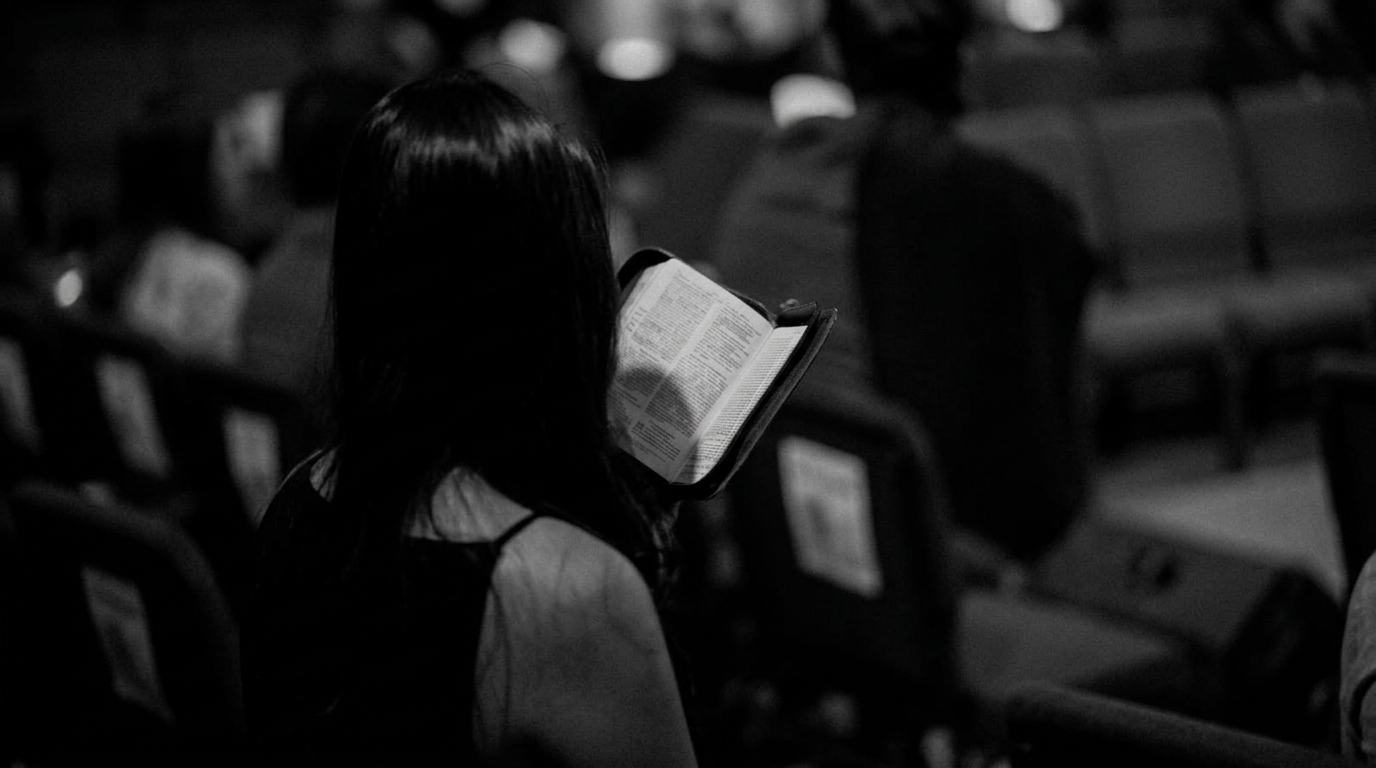
At Sunday services, home groups and Christian conferences, physical Bibles have quietly disappeared from church life.
It’s not that Christians have abandoned scripture, but they have sub-contracted it to an app on their phone. Why carry around a brick of a book when it’s all available on your mobile device?
I know I could sound like a grumpy middle-aged man moaning about change, but I’m not a Luddite. I’m not asking us all to go back to the King James version or start wearing cardigans again (although I did love a cardy in my time).
Digital strengths
I know that digital versions of the Bible are brilliant for finding a verse you half-remember, research on themes, comparing translations, enlarging the text for tired eyes or for listening to on the commute.
But for actually reading the Bible: the slow, attentive, soaking-in kind of reading we need, I believe that nothing beats the actual words on a physical page. Our phones won’t do.
So these are my five reasons to put away our phones and use a proper Bible:
1. Phones are distracting
Nothing in all history has been more successfully designed to dominate our attention than a smart phone. The last thing we need when we turn to God’s Word is a stream of notifications telling us what other people are doing and who wants us next. Our attentiveness is not enhanced by checking social media when the sermon drags on.
Also, I cannot write honestly on this subject without confessing to one of my most embarrassing moments ever at a Housing Justice conference a few years ago. During a reflective moment in a communion service, I slyly checked the cricket score but accidently set off the BBC radio coverage. I panicked and wildly pressed all the buttons which caused my phone to freeze. I had to leave the room in shame as the Test Match Special commentators drowned out confession.
2. We need to see the text in context
Jesus’ stories and teaching don’t float free. They are responses to events: a question, a meal, a funeral, a dispute. The Sermon on the Mount has a beginning, a middle and an end. The Parable of the Great Banquet comes directly after Jesus observes how people behave at a dinner at a Pharisee’s house. Its helpful to see where things come in relation to other events.
With a printed Bible, what comes before and after is right there on the page and its easier to see the text in the context of what has happened before and after.
3. It helps us grasp the whole sweep of Scripture
Open a Bible and you get to learn its narrative shape: Genesis, Exodus, the law, the histories, the Psalms in the middle, wisdom, the prophets. You feel the sheer weight of the Old Testament next to the New and begin to see how the whole thing holds together.
Every time you struggle to find Habakkuk, you learn a little more about where it sits. A phone whisks you straight there but teaches you nothing on the way. We are embodied people, and we remember physically. We recall where on the page a verse sits, what’s opposite it, and the coffee stain next to it.
4. A Bible can become a companion for life
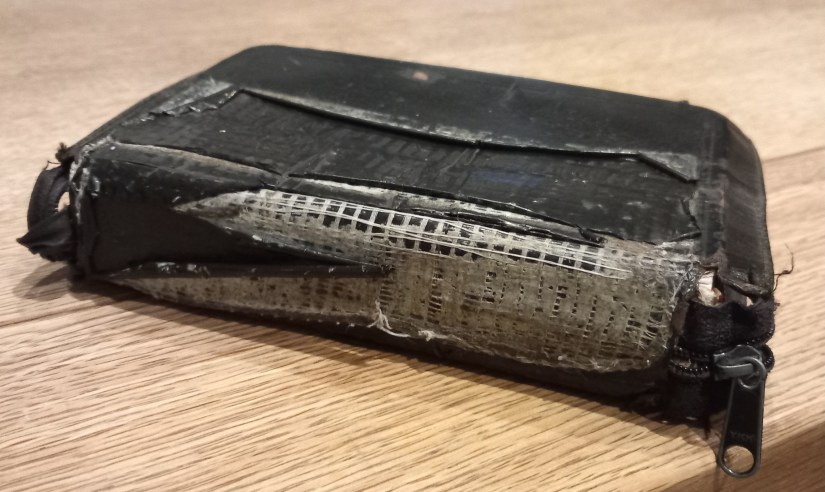
My old black leather, zip-up NIV Bible has been my companion for 33 years. I bought it in 1993., the same year I started working with people who are homeless. It has accompanied me on this whole journey of long night shifts and many ups and downs. It is now crinkled, creased, battered and held together with gaffer tape, but it is genuinely one of my most precious belongings.
I know my way around it. I know the headings, where to find the passages that have carried me through tough times, and where to turn to help someone else. No phone will ever be that. My physical bible needs no upgrade, re-boot or battery and has no built-in obsolesce.
5. An open Bible is a public thing
A screen is private. Nobody knows whether you’re doing a deep dive into Paul’s Letter to the Romans or actually just checking the cricket scores.
But an open Bible on your lap, or everyone in a home group turning to the same page together, says something important and collective about what we value. It’s a lamp to our feet and a light to our path: the Word is shared, and we’re under it together.
A radical return
This isn’t about nostalgia or turning the clock back. It’s a call to take the radical message of Scripture seriously enough to give it our hands, our eyes and our undivided attention.
So next Sunday or for your next homegroup, take along a real Bible. Dust off the one on the shelf or buy a new one. Write in it, underline it, and make it your companion and aim to wear it out. Put the phone away on silent.
And churches, hand out Bibles as people arrive and stop projecting the text up on your screens. And readers, give out the page number and some tips on where the book is and give people time to find the right place before you start!
As Ian Paul puts it in his more in-depth article on this subject:
“We are not spirits trapped in physical bodies, waiting to escape to an immaterial spiritual world. We are body-soul unities, and our future hope is physical, in the resurrection of the dead and a new heaven and earth. No wonder the physically of texts matters to us.”
Why we need to be reading printed Bibles – by Ian Paul
And related G+T articles:
- ‘A light to my path’: my battered, 32 year old working companion
- What I have learnt from my ‘Soul Survivor’ Bible
- What the Bible says about homelessness
Discover more from Grace + Truth
Subscribe to get the latest posts sent to your email.


When I was a young minister over 40 years clerical collars were favoured particularly as a badge of entry to hospital wards. But as time went on I and most of my colleagues abandoned the ‘collar’ and I realised if I carried a Bible it acted as a badge of entry and as a reminder to me and those I visited that I wasn’t there to chat about the weather or even their illnesses but somehow to bring God’s perspective into the situation, even if I didn’t actually read scripture on every visit. There is something earthed about opening the Book which is lost when reading off a screen whether on a phone or in church.
LikeLike
thanks John. Yes, symbols and signs are important. I also carry my bible around to more places than I actually use it.
LikeLike