I am used to writing precisely manicured documents tailored to appeal to audiences whom I understand. Sometimes that’s been Government Ministers, Civil Servants, MPs, Council Officials, academics – you get the picture.
When Jon asked me to write some thoughts on my own journey to Christianity, my initial reaction was to produce something nicely pre-planned and demonstrating a coherent, logical narrative. However, instead I sat down and, using an actual pen and paper, allowed my thoughts to emerge from within.
Necessary ritual
There is an irony in my story that I have prayed to God, at least weekly, for the last 14 years. Meetings that started with “My name is Paul and I am an addict”, ended with various versions of the Serenity Prayer, all of which asked for God’s guidance, wisdom and tolerance for the struggles ahead.
As I am sure many of you are aware, a central tenant of Twelve-Step Addiction Fellowships is a belief, and a willingness to “hand over lives”, to a “Higher Power” (HP) and seek a “Spiritual Awakening”. Although it is not proscriptive what this HP should be it seems clear, to me, that the founders of AA in the 1930s (where such Fellowships began) were largely talking of the Christian God as they understood Him.
However, when I was using the word God in the Serenity Prayer I was doing so with the indifference of a necessary ritual to belong. I didn’t really have time for anything “supernatural”. In so far as I considered it at all, the only position that I thought one could coherently hold was the skeptical agnosticism associated with the Enlightenment.
Passion and compassion
This did not mean I had the antipathy towards Christians. Far from it. I wrote a piece for this website about a decade ago applauding the Christians who I had met during my many years working with people experiencing homelessness.
These people were an inspiration who were putting their faith into practice. With both passion and compassion, fired by their faith, they sat beside the poorest in society without judgment and did what they could to practically help them. I guess (and I need to own this) I saw these individuals as naïve heroes. Part of me wanted to believe what they did, but I simply didn’t.
Turning point
A turning-point for me came in 2017 when after 23 years of working in homelessness at an operational, strategic and policy level, I returned to university. This gave me time to read about ideas that I had not come across before. I became particularly fascinated by the way that previous experiences shape how we see the World now.
I had grown-up in what I will colloquially call a “dysfunctional family”. Generations of childhood trauma had been handed down meaning my childhood was one of continual fear. I could not even have Faith in my own parents, so how could I even countenance an external, intangible force which allowed my neglect and abuse.
New possibilities
As I spent time at university I began to understand that what I might call the “naturalist” certainties I held were a product of my life-experience rather than a reflection of any external reality.
I became aware of unanswered questions such as the Origins of the Universe, why is there something rather than nothing, quantum level physics, the foundations of morality, the mysteries of self-consciousness and subjective experience. In other words, the rug had been pulled from under my certainties, and my mind (and heart) were open to new possibilities.
The historical Jesus
A major influence were the writings of Ancient Historians. I had presumed that the New Testament was a product of hundreds of years of oral tradition and increasingly elaborate stories. However, I learnt that many documents were relatively contemporary.
This material told of a prophet named Jesus who, performed miracles and was crucified for blasphemy whilst claiming to fulfil prophecies detailed in Jewish texts. Several witnesses claimed to have seen Jesus rise again after death.
They, and those they relayed the story to, spread news of this experience at the risk of brutal torture and death. Against all odds, by the Fourth Century this had become the official religion of the same empire which had persecuted them.
The person of Christ
But mostly I became fascinated by the figure of Jesus the Christ. The promised saviour of humanity who came not in fine robes, or military uniform. But instead, eschewed violence, material prosperity, socially created hierarchies and called for the love of all people. Who spent his time with the poorest, downtrodden, sickly and shunned.
This individual, a humble carpenter (or similar) who preached messages alien to many of the unchallenged philosophical values of the likes of Plato and Aristotle.
A leap of faith
I realise that this article has been mainly about a conversion by logic, rather than one of heart and soul. So let me say that the evidence allowed me to make the leap of Faith that Jesus was the Creator of the Universe who choosing to experience life as a human. Showing the way of the truth and the light, spreading messages of peace and love. This being done by persuasion and example, not force or coercion.
So many of those values running through our society that we barely even think of them. I love this sentence from Anthony O’Hear and Judy Groves (2012) which I never tire of reading:
“how is it that so powerful and endlessly fascinating a complex of ideas could condense on so unlikely a figure of Jesus of Nazareth, unless there was indeed something of the super-human about him.”
Weeping alongside me
Finally, returning to the question of where Jesus was when I was suffering as a child. I now believe he was right beside me, weeping alongside me (and the millions of others who are hurting every single day).
Far from being a distant God who set the Universe running and then took a backseat, He chose to come amongst us and experience ridicule, betrayal, abandonment and the most brutal form of execution ever devised. By doing so, He knows what agonizing pain feels like. He then rose again to show how God will ultimately defeat that suffering (if not in this World, then the next).
The real spiritual awakening
In many ways, my life has been a paradox. To the external world I was an Oxford Graduate, a PhD. holder, a writer of strategies, a regular attender at rooms of political power. But this was juxtaposed with an internal, existential, emptiness and loneliness which was temporarily numbed by addictions. Deep inside I craved peace, simplicity and the feeling of living a good life.
Now I live in a modest retirement flat in Salisbury, where the largest cathedral spire in the country dominates the skyline. I am married to the most wonderful woman I have ever met. I have two fantastic step-children to whom I try to be the best role model I can. My Dad is terminally ill and lives a mile down the road in an Assisted Living scheme where I visit almost daily. My wife runs a small business, and I quietly do the accounts, invoicing and taxation. I live a simple but contented life.
Gratitude, love and faith
After trying a few churches, I now attend the local Methodist church where I feel welcome, comfortable and safe. I love the way the Minister preaches and engages with people. But I also pop into other churches for solace, peace and reflection.
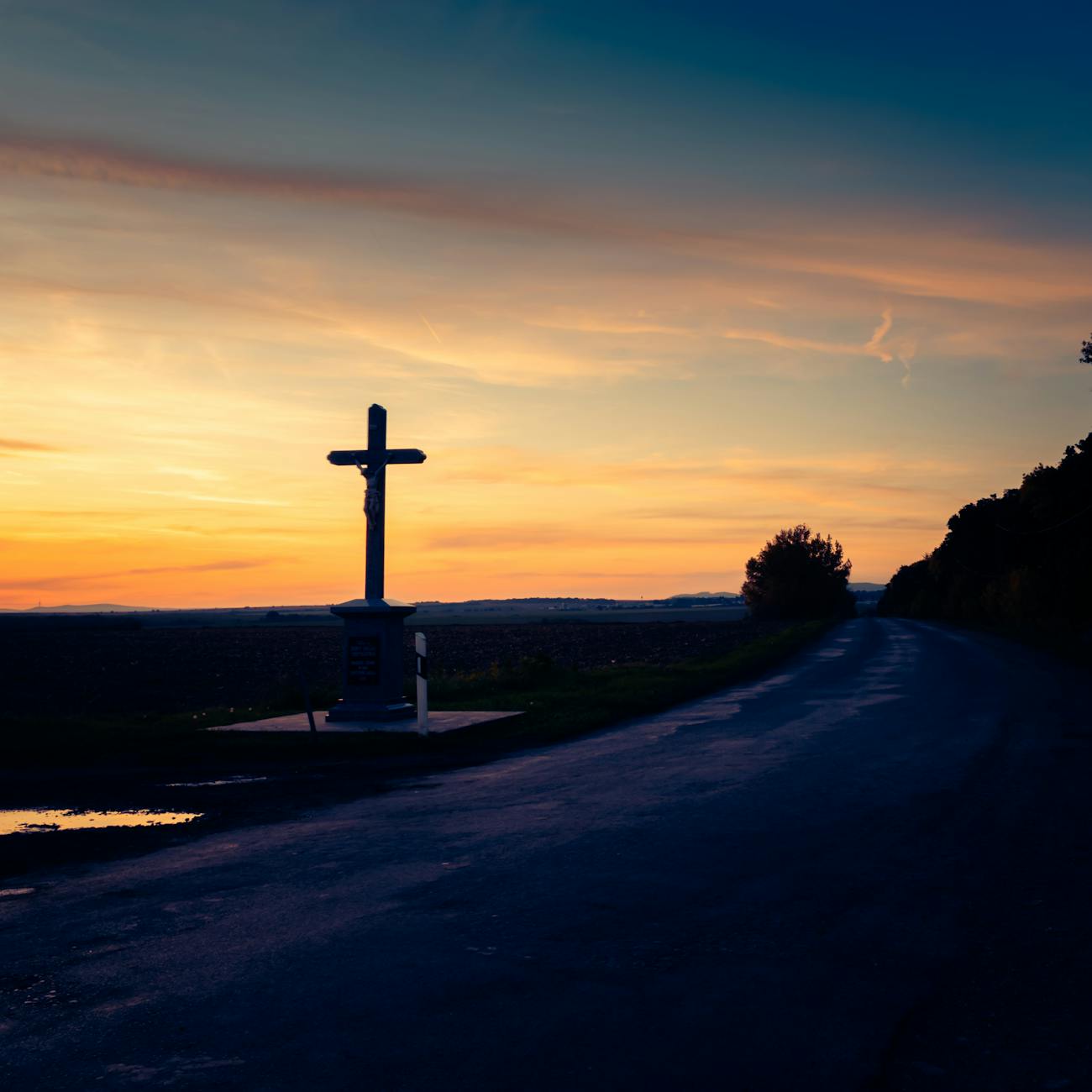
Ten years ago, I thought happiness meant impressing Parliamentary Select Committees. Now I look upon images of the humble figure of Jesus on the cross, wherever I see it, and feel a sense of gratitude, love, and faith which no transitory earthly treasures could even come close to offering.
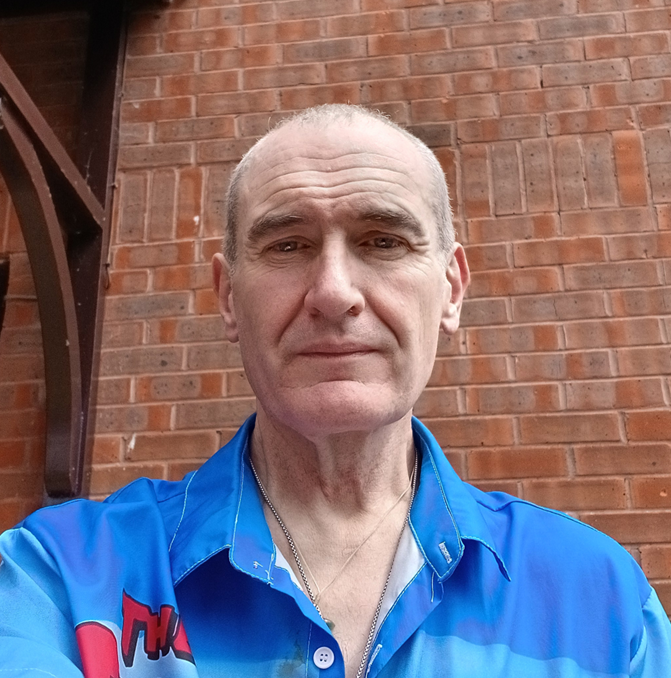
After decades working with people affected by homelessness, Dr Paul Anderson, now lives in Salisbury.
Discover more from Grace + Truth
Subscribe to get the latest posts sent to your email.


Thank you Paul. Good to read your coming-to-faith story. To misquote Shakespeare: Some are born Christian, some achieve Christianity, and some have Christianity thrust upon them. Coming to faith through AA put me very much in that third category. I didn’t seek, I was sought after.
Coming to believe didn’t require me to do anything, only to let go of my cultivated resistance. Not do, only undo. It was a slow process for me—and is still. The longer I practice my faith though, the more I see a beautiful inverse at play: as my material needs diminish, so my life abounds in richness. More will be revealed, indeed.
Stories such as yours are so important for other seekers (or sought-afterers). Ultimately our choice is binary: turn away or turn towards. I’m happy we both choose the latter.
LikeLiked by 3 people
Thanks Paul. Having known for you for over 30 years in a professional capacity I was so encouraged and fascinated by your journey of faith. Thanks so much for expressing it so honestly and humbly – its inspiring to read about the truth of the gospel unfolding gradually, in part, through intellectual reflection. I hope you find it personally encouraging to have shared this publicly. God bless mate!
LikeLike
Thank you guys. Feel honoured to be alble to share my story
LikeLiked by 1 person
Thank you so much for sharing your story Paul – it was so moving and humbling. It’s really blessed me.
LikeLike
It is amazing to read Paul’s story – how the grace of God came into his life. One day, Paul will spend all of eternity with his Lord, where there will be no homelessness for Jesus has gone to prepare mansions for all who love Him.
LikeLike