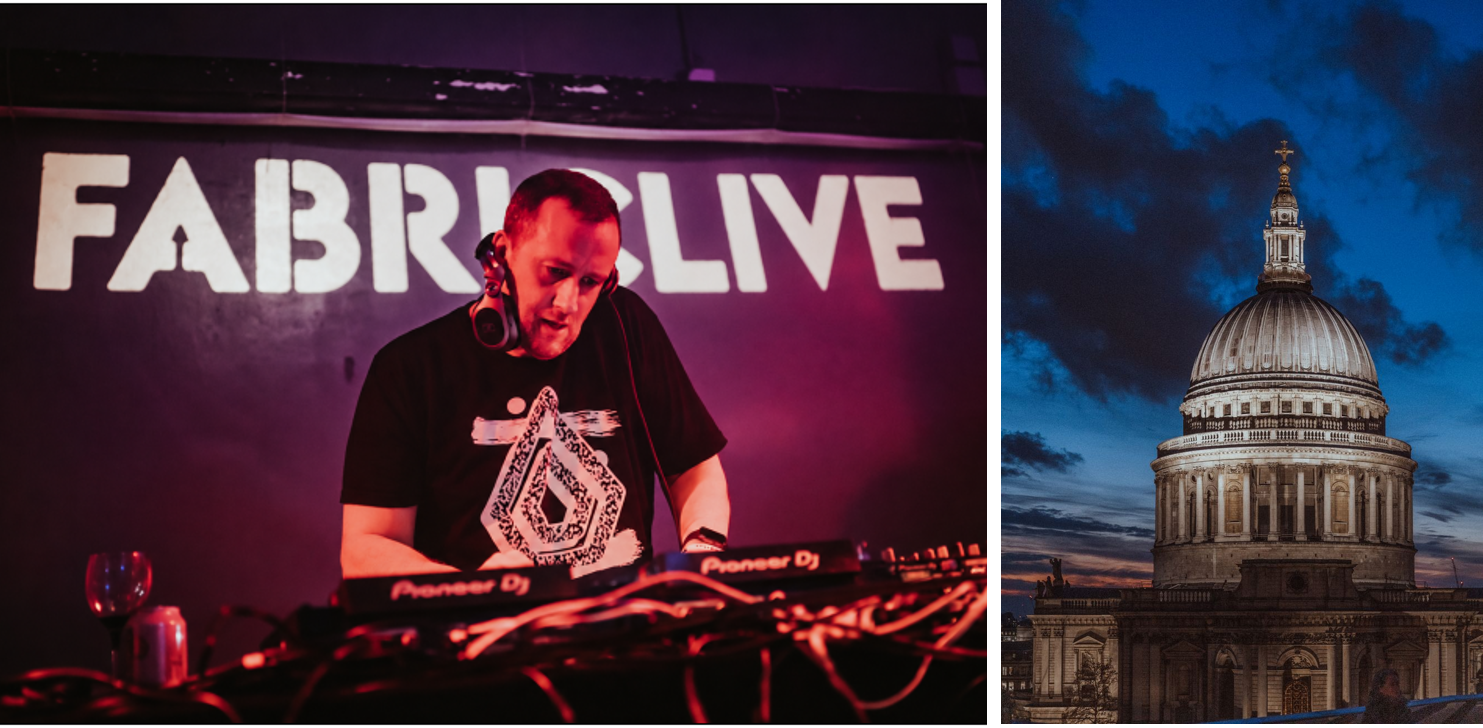
Steve Jefroy has spent more than 20 years in both Christian leadership and drum & bass. What began with DJing to connect with young people in rural Norfolk grew into an international career as producer and DJ BCee. He runs independent label Spearhead Records, promotes club events, and leads Hope into Action Diss.
I have spent most of my adult life in two worlds that, judging by some of the reaction to Fabric partnering with St Paul’s Cathedral, apparently aren’t supposed to mix. Last Friday I played a four-hour set at Fabric and as I write this, I’m in Sardinia at SUNANDBASS, a week-long drum & bass festival.
Firstly lets be clear, St Paul’s is not installing a nightclub sound system under the dome and turning the cathedral into a rave. Fabric has already presented events there, and the new four-year partnership begins with The Cinematic Orchestra on 29 October. St Paul’s describes these as seated, minimal-amplification concerts intended to welcome new audiences.
Caricatured
Some reaction has nevertheless been extraordinary. The Spectator described Fabric in terms of “MDMA-fuelled drum and bass benders” and joked about the “house of God” becoming a “house of techno”. Apart from techno and drum & bass being completely different genres, it shows how easily nightlife can be caricatured from outside.
Of course, drugs exist in rave culture. Fabric lost its licence in 2016 following the tragic deaths of two 18-year-olds who had taken ecstasy. But drugs are not intrinsic to electronic music culture. Taking an ecstasy tablet doesn’t automatically make someone a drug addict, just as drinking three pints doesn’t automatically make someone an alcoholic.
Community
Years ago I played a Big Fish Little Fish family rave at Fabric. My children came. There was candy floss, face painting, bubbles, a giant parachute and a buggy park in Room 3. The DJs still played proper sets and there was an incredible sense of community. Nightlife creates friendships, belonging and social connection.
Britain has lost 28.9% of its late-night venues since March 2020. I find it strange that Christians would automatically treat this culture as something people need rescuing from, rather than asking what the Church might contribute to it.
Serving
At Hope Church in Diss, we try to welcome the whole community. We run a food bank, community café and youth work, while independent groups hire the building too. We once showed the World Cup on a big screen and even got a temporary licence so people could enjoy a beer! Churches are regularly polling stations too.
None of this means we’ve forgotten what the building is for. We want it to serve our whole community, not simply those who attend on Sundays. So why should beautiful contemporary music automatically be different?
Sacred encounters
I understand the theological concern. Bishop Robert Barron has argued that the Church should go into secular spaces and draw people towards the sacred, rather than making sacred spaces resemble secular ones. There is something worth hearing in that. But I wonder whether we’ve become too focused on protecting sacred buildings rather than creating sacred encounters.
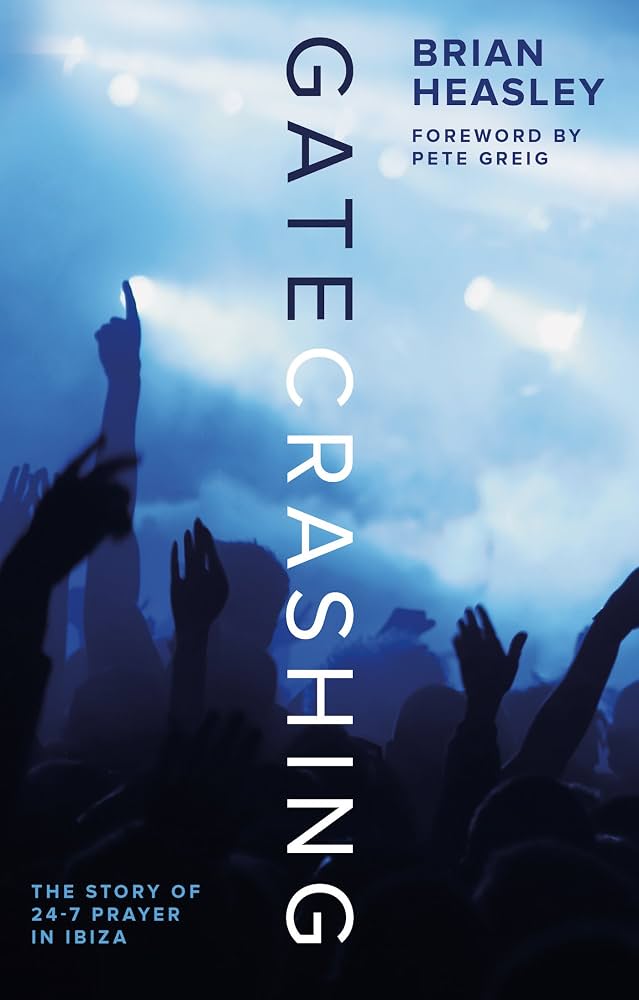
I asked my good friend Brian Heasley, International Prayer Director for 24-7 Prayer what he thought of the furore. He is the author of Gatecrashing, which tells the story of the seven years he spent leading 24-7’s work in Ibiza, two of which I spent working alongside him. He said:
“I’m asking myself, ‘Does the building still have a role to play in the mission of the church, or is it a purely utilitarian tool, a home, a roof to gather under?’ If the building itself does have any significance in today’s context, then we should be doing all we can to help people engage with the God the building points towards.
We should not be frightened of new ways to attract people into ancient spaces as long as we don’t forget the God to whom the ancient space points.”
Strikingly inclusive
When Jesus cleared the temple, one of the scriptures he quoted was not about keeping outsiders away. It was the opposite: “My house will be called a house of prayer for all nations.”
The original passage in Isaiah is strikingly inclusive. Foreigners who join themselves to the Lord are welcomed. Perhaps the more biblical question isn’t simply, “What are these people doing in here?” but, “Now they’re here, are we helping them encounter God?”
Paul wrote that he became “all things to all people” so that “by all possible means I might save some” (1 Corinthians 9:22). That isn’t permission for the Church to abandon its identity in pursuit of relevance, but its a call to engage rather than retreat from culture . And in Colossians Paul wrote: “Be wise in the way you act toward outsiders; make the most of every opportunity.”
People who might never normally enter a church are literally buying tickets to walk into St Paul’s Cathedral. If that isn’t an opportunity, what is?
Challenge to St Paul’s
And that is where I would challenge St Paul’s too. Don’t let the experience end with, “Wow, I’ve never been in here before. What a cool building.” Architecture isn’t going to transform somebody’s life. God can. Why not include with every ticket an invitation to Alpha or another opportunity to explore Christian faith?
Imagine if 200 people wanted to come back each week to learn about Jesus. How would the cathedral accommodate them? Now that would be a fantastic tension to manage.
And why shouldn’t the partnership work both ways? If Fabric can bring contemporary music into St Paul’s, could St Paul’s bring something into Fabric? A chaplaincy presence? Prayer? Conversations about faith? Perhaps even an occasional gathering for people who would walk into a nightclub out of curiosity but wouldn’t dream of walking into a church.
Perhaps the most exciting question is: What can Fabric bring into St Paul’s, and what can St Paul’s bring into Fabric?
Faith in music
Last Friday, a group of Christians came specifically to Fabric to hear me play. They love drum & bass, nightlife and Jesus. Many of the tracks I played were music I wrote with God in mind. I don’t market them as “Christian music”. I’m simply a Christian who makes music, and inevitably my faith finds its way into what I create.
There are things rave culture sometimes does better than the Church, creating extraordinary community across backgrounds, generations and geography. Christians should be humble enough to learn from that rather than condemning it from a distance. Mission isn’t like a James Bond script: infiltrate the nightclub, extract the sinners and get them safely back into a church building.
St Paul’s says its vision is “Inspiring faith. Welcoming everyone.” I hope it does both. Open the doors. Welcome the culture. Build the relationships. But remember why the doors are open. Help people discover why that magnificent building exists in the first place.
This isn’t a problem to fix. It’s a tension to manage. And managing tensions is one of the things good Christian leadership is supposed to do.
Steve Jefroy is a music producer and DJ working as BCee. He leads Hope into Action Diss and is a member of Hope Church Diss.
Discover more from Grace + Truth
Subscribe to get the latest posts sent to your email.

