
We live in a world seemingly spiralling out of control facing environmental catastrophe, unparalleled greed and injustice, wars, famine, and homelessness.
What good are our prayers and actions when set against the violence and injustice towards people and creation itself? It is easy to succumb to a counsel of despair.
Yet the Christian faith offers us an understanding and experience of Jesus as bringing an ‘upside-down kingdom’ where God’s preferential option for the poor and marginalised is realised.
Rather than giving in to despair, countless followers of The Way through the last 20 centuries have consciously swam against the tide of public opinion and the injustice of empire, to seek to present an authentic representation of what following Jesus looks like.
Liberation Christians
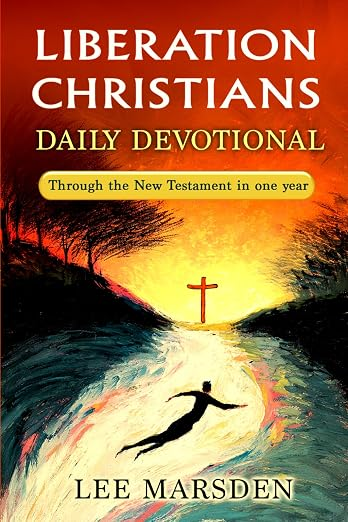
In a new daily devotional, Liberation Christians, I have drawn inspiration from the lives and witness of 365 Christians who have sought to live authentically and make a difference to the world through sharing the good news and working for peace and justice.
Over the past few years, it has been my practice to start each day in a time of prayer, Bible reading, and reflection with the help of a daily devotional. It helps ground me and bring a sense of perspective to the different challenges that the day will bring. It provides structure and directs attention and focus to Jesus rather than stressing about the day ahead.
I’ve found such devotionals tend to be heavily conservative and too often have tended to grate rather than prove helpful. A notable exception has been Shane Claiborne, Jonathan Wilson-Hartgrove and Enuma Okoro’s Common Prayer: A Liturgy for Ordinary Radicals which includes short biographies of radical Christians.
Daily format
These short biographies inspired Liberation Christians: Daily Devotional through the New Testament in One Year. A devotional which follows a format of an inspirational quote from the featured Liberation Christian of the day, followed by a short biography, a reading from the New Testament, an encouragement to pray for others, the Lord’s prayer, and then a prayer for the day.
When considering who to include in the biographies, I wanted to reflect the diversity of the church across twenty centuries and five continents to give voice to, and derive inspiration from, progressive Christians through the ages regardless of class, race, creed, gender, or sexuality.
Many of whom I knew nothing about until researching the book. The biographies include Quakers, socialists, liberation theologians, pacifists, feminists, womanists, missionaries, evangelists, civil rights leaders, social gospellers, anarchists, mystics, environmentalists, peacemakers, and LGBTQI+ activists and many others.
Followers of The Way
The criteria was that each one must have been seeking to be true to The Way and made a positive difference in the lives of their communities and the wider church. Those who have sought to live their lives by grace and truth. None of the subjects are perfect and, like each one of us, are flawed and so the biographies are not hagiography but reflect their unique contribution and are designed to encourage further enquiry.
There are so many inspirational figures throughout the book but I will mention just two of my favourites.
Peace process
Father Alec Reid (1931 – 2013) gets an entry on the anniversary of his death on 22 November. Along with his fellow Redemptorist priest, Gerry Reynolds, he was a leading, though under acknowledged, figure in the Northern Ireland peace process.
He devoted much of his life to bringing together nationalist and republican factions in Northern Ireland, facilitating secret meetings between Sinn Fein’s Gerry Adams and Nobel Peace prize laureate John Hume in Clonard monastery, West Belfast.
He sought to devise a peace strategy that would provide a pathway to allow nationalist aspirations of a re-united Ireland to be realised over time. These meetings paved the way for the IRA to give up its weapons, overseen by Reid, and sign up to the Good Friday Agreement in 1998. In a situation which seemed unresolvable, Reid saw possibility and set to work accordingly.
Building on foundations
On 12 April, Maria Nirmala Joshi (1934 – 2015), gets a mention. She felt called to join the Missionaries of Charity in 1958, after meeting Mother Teresa, to work among India’s poorest. She formed a contemplative branch of the order and had the unenviable task of succeeding Mother Teresa six months before her death in 1997.
Undaunted by the task of following in her legendary predecessor’s footsteps she expanded the charity’s outreach to 134 countries with over five hundred orphanages, hospices, and homes and charitable centres for the poor across the world. A powerful reminder that we all stand on the shoulders of giants and, like Joshi, can build on foundations laid by others.
Resources for the journey
It is easy to be downcast about the state of the world. But, as I have found in researching and collating Liberation Christians, in drawing inspiration from saints like Reid and Joshi, we can not only survive the poly-crisis but actively seek to make a difference day by day.
Prayer, bible reading and reflecting on those fellow followers of The Way can be resources for our journey to follow Jesus and make a difference in His name.
…………………………
Lee Marsden is Professor Emeritus of Faith and Global Politics at the University of East Anglia.
Buy Liberation Christians – Daily Devotional
Discover more from Grace + Truth
Subscribe to get the latest posts sent to your email.


this sounds excellent perhaps a shame that Lee didn’t talk to Red Letter Christians UK who have just published a UK version of Common Prayer called Living for Jesus and Justice. Any encouragement to maintain hope at this time and keep scripture reading and real life testimony of people making a difference is welcome. 🙏🏼💪🏼
LikeLike