Recently I went to a local friend’s birthday party. In amongst the usual chat and catch ups, my friend Ian, whose sons were in primary school with mine, raised a great question to a group of us standing at the bar:
“There are so few good male role models these days. Who are my boys supposed to look up to? Name one decent male role model.”
Err…well…um…we scratched our heads…David Beckham was proposed and quickly rejected; Marcus Rashford was suggested with a bit more conviction and I think Bear Grylls got a mention. But as everyone had to admit, it was a good question.
I have been thinking about it ever since. Who is a good male role model?
Southgate’s lecture
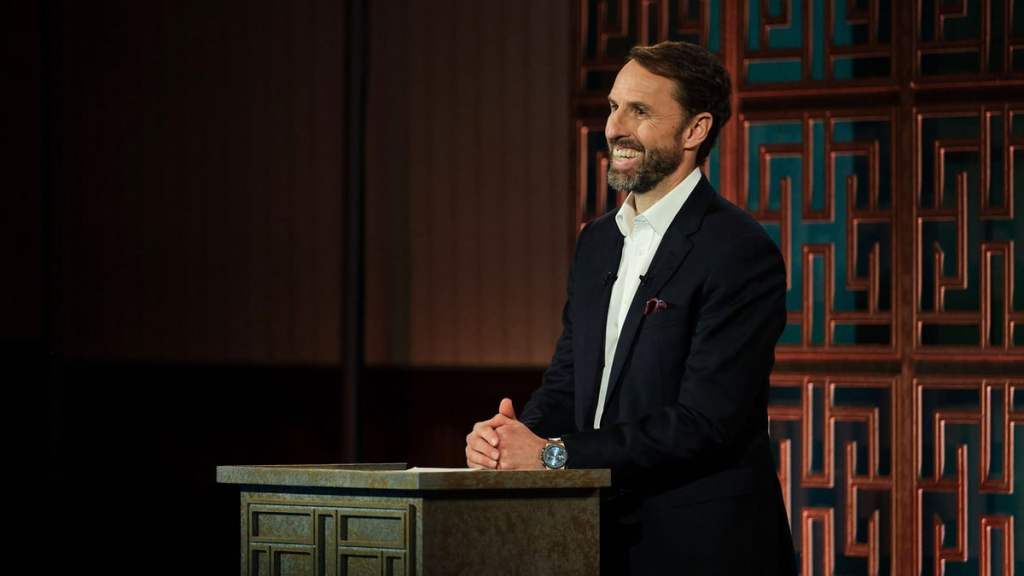
And this week former England football manager, Sir Gareth Southgate, gave the BBC Dimbleby lecture about young men and the challenges they face.
He delivered a brilliantly crafted talk based on his own experience, laced with humour and focussed on a critical issue for our country.
High profile ‘failure’
Southgate framed his talk around what he had learned through experiencing the highest profile ‘failure’ imaginable.
Back in Euro ’96, when football’s profile was at its peak, he famously missed the crucial penalty in the semi-final versus Germany at Wembley with the whole nation watching. Football was supposed to be Coming Home, but his fluffed penalty meant it never did…
I remember watching the match and penalty miss in a pub in Croydon with my school mates. Shortly afterwards, the cocktail of disappointment and booze led to fights breaking out. It was a sad illustration of toxic male responses to failure and defeat.
Belief and resilience
Southgate has not allowed this experience to negatively define his life. But in many ways, his response to it has defined his life. As he explains, the penalty miss helped him develop two key traits which were at the core of his lecture: belief and resilience.
These qualities are not intrinsic but need to be cultivated intentionally. And how we deal with the inevitable challenges and disappointments of life is critical.
Dealing with failure
As a teenager, Southgate faced the disappointment of being released by Southampton Football Club. He went to Crystal Palace as an apprentice and shared the hard words that youth coach Alan Smith said to him aged 16:
“Look, you’re a lovely fella, good manners and if you were my son I would be very proud of you. But you are weak and as a footballer you’ve got absolutely no chance.”
The fact that Alan Smith was in the audience to hear the lecture says so much. Because this tough love was what Southgate needed: Smith did not say them because he wanted Southgate to fail, but because he wanted him to succeed.
Asking hard questions
Later, Stuart Pearce, who had also missed a critical penalty for England, would be a great help too because he told Southgate the truth about the abuse and vitriol he had to expect. Pearce’s honesty ‘forced me to ask the hard questions’ which put things in perspective and helped him become ‘a stronger, better man’.
Southgate believes that boys especially need ‘to fail often and learn fast’ because this is how belief and resilience are cultivated. As he said:
“If we make life too easy for young boys now, then we make life harder for them as young men.”
It’s a powerful example of the importance of grace and truth.
‘Effortless success’
But we have to face the truth that we live in a culture which does not foster a healthy sense of belief and resilience. Social media cocoons young people in an unreal world:
“Today, young people are targeted with images of the perfect body, the perfect career and the perfect life. A beautifully crafted highlights reel where success appears to be instant and effortless. How can this make them feel good about themselves?”
Too many young men today have lost many of the traditional family and community role-models that are so critical. As the Centre for Social Justice report Lost Boys says, 2.5 million children live with no father figure at home. Teenage boys today are more likely to have a smartphone than a dad at home.
Toxic influences
The effect on boys’ well-being is devastating:
“As real-world communities and mentorship declines, young men end up withdrawing, reluctant to talk or express their emotions…They spend more time online searching for direction and are falling into unhealthy alternatives like gaming, gambling and pornography.”
And into this vacuum come other influences:
“And this void is filled by a new kind of role model who does not have their best interest at heart…callous, manipulative and toxic influencers, whose sole drive is for their own gain. They willingly trick young men into believing that success is measured by money or dominance, never showing emotion, and that the world, including women, is against them.”
Role models
Gareth Southgate’s lecture has sparked similar discussions to those prompted by the Netflix drama Adolescence. It is a vitally important national conversation.
And it’s not a problem we can simply blame on the government but one we can all do something about. Everyone, whether as a parent, uncle, neighbour, colleague or volunteer, can take steps to be a better, real-life role model and help fill the void in boys’ lives.
But let’s go back to the question my friend Ian posed: Who are the role-models for young men today?
Who would you suggest? Please leave your thought and reasons why in the comments below…
Watch Sir Gareth Southgate’s Dimbleby Lecture
Discover more from Grace + Truth
Subscribe to get the latest posts sent to your email.


I thought this from JP Mateta https://www.bbc.co.uk/sport/football/articles/c2342r9ze9do.amp
was a wonderful example – also this week – also from Crystal Palace
– of not just forgiveness but of not assuming the worst in other people.
LikeLike
Yes! Great example and also good to maintain the Palace theme…
LikeLike
Hi Jon
I know I am biased, but seeing my Grandchildren growing up, you have been a very positive male role model for them.
Granddad
LikeLike
Thanks Jon – that’s very kind and thanks for being a great grandfather to my lads! But who would you suggest who is more in the public eye?
LikeLike
I believe the best male role models are fathers, and men known to the family. I think more should be said about the value of positive committed family relationships.
LikeLiked by 1 person
Interesting to read this article about “who are the male role models?” because my husband [aged 56] and myself [aged 63] were talking about our lack of male role models which has led to him being a workaholic and I used to overly mother men. His father worked 6 days a week and then Sunday was full of church activities. Mine also worked 6 days a week which led to my mother seeking affection from other men and they got divorced when I was 18.
Too often I wonder if we think this lack of male role models is a modern thing replaced by smart phones, when actually it has been going on for way too long and our fathers, then ourselves, do not know what good male – or female – role models are and how to be that.
I remember in church all of us over 40 were expected to be spiritual mothers or fathers to those younger, which was a great idea, but I noticed so few of us really knew what we were doing, and a lot of what we did was to push young people to “fit in” to church more.
I still think we need to up the importance of parenting and nurturing rather than being told parenting is hard work and that really everyone needs to be having a degree and a career!! Not sure how one does that.
Great article and lots to ponder on and rant about 🙂
LikeLike
Have a look at David Goodhart’s ‘Head Hand heart’ especially the last chapter where he says ‘I’m not a religious man but …’ Diane, thanks for your honesty. You are right the church is too much about a certain type of institutional doing. We need throughout or lives to be changed from glory to glory. Each with our own God given giftings, mutually growing together, recognising how in our diversity we reflect the image of God and actively being salt and light in our communities. https://www.amazon.co.uk/Head-Hand-Heart-Struggle-Dignity/dp/B08DJ9R87L/ref=sr_1_6?crid=3LZEF9C81NNTS&dib=eyJ2IjoiMSJ9.i0vWRfLwbqueE0HxV1Jphg_wXVL-P-HlikN4qk8zUURGnHAEj7kBkTj_nlIaNyn3L2VnxmUv0qYnSo2vnk2KTUJboZ0r8M3Mru8W1lD3K28waff_hS7tnoeckle1JWdYZdkbzvrJsacSSegU-hbOC5d8MoxX-2XHEIkT0H49choaVAcNDUSKoACBqhL5cS_5WWJbovQRo9jC_uKkXYDQ1E8mtnov_BMOoL5tBsdwodM.dDbzAkdhO1QuLI3jsNesjNpWZBMvmd7XAz-xS_w74eI&dib_tag=se&keywords=david+goodhart&qid=1742736586&sprefix=David+Good%2Caps%2C98&sr=8-6 . See Goodhart’s other book ‘The Road to Somewhere’ too!
LikeLike
Who are good male role models nowadays? I asked my 19 and 21 year old sons. They scratched their heads for a bit and came up with David Tennant and David Kaluuya.
Then they said that role models don’t have that much influence on most people, and that a lot of young men feel alienated because of economic inequality and the lack of hope that creates, but that older people prefer not to think about that and are more comfortable thinking more individualistically about role models.
I suggested Ben Stokes because of his talent and the amazing leadership he showed turning England men’s cricket around, practicing what he preaches and sticking to it, all while finding reading and writing a bit of a struggle. My sons said that was fair and some people would know him.
I also suggested Ed Miliband for his vision and stamina fighting away on climate change for so long, and being a good colleague after stepping down as leader, and they said I was showing my age and not many young people had heard of him.
LikeLike
I asked my 19 and 21 year old boys who they thought were good male role models nowadays and they scratched their heads for a bit and came up with David Tennant and David Kaluuya.
Then they said role models are overrated and don’t have a huge influence. They felt older people are more at ease thinking individualistically about role models than collectively about economic inequality, which is a bigger reason boys and young men feel alienated and hopeless.
I suggested Ben Stokes, for his talent and his visionary leadership turning England men’s cricket team around, working hard, being resilient and practicing what he preaches. The boys said that was fair and some people would know Ben Stokes.
I also suggested Ed Miliband for his far-sightedness and stamina working away on climate change for all these years, and being a good colleague after having been unsuccessful as leader, and they said I was showing my age and hardly anyone their age had heard of him.
LikeLike
If you start from the perspective that no one is perfect, there are loads of positive male role models. I’d start with Lewis Hamilton, Mo Farah, Tim Peake and Ed Sheeran. One of the main problems is that our culture/media likes to tear people down, so we don’t highlight the positives.
LikeLike
There’s a wider issue here, too, not just about masculinity but about cultures of learning.‘Fail often and learn fast’ does not describe most Christian – particularly evangelical (but not exempting ‘liberal’ from this) – churches I can think of. ‘Stigmatise or hide failure and error; proceed cautiously; short-cut or negate learning by imitating leaders’s statements, not analysing them; resist scrutiny’ would seem closer to the truth.
LikeLike
Before being able to identify (or be) a good role model, we have to identifty the role. What role do men, as men, have, or does their masculinity simply exist to perform a biological function? Our public discourse, dominated by equality defined in the crudest manner, militates against young men developing a positive aspiration for their masculinity. Unsurprisingly, the vacuum left is filled with very ugly alternatives.
LikeLike