
The Kingdom Way Trust are a great Christian charity who run a range of services for people affected by homelessness in Eastbourne and run the local Hope into Action franchise.
As part of their 15th anniversary celebrations this week they asked me to lead a seminar on ‘Why relationships are central to addressing homelessness’.
We had a packed room of around 60 with a great mix of people from the local authority, charity professionals, volunteers and churches, as well as representatives of national government and local politics.
Most important thing
At the start, I asked a question for people to discuss with the person next to them:
In your life, what is most important to you?
The people in the room were diverse but the answers were very similar. One person said “Ben & Jerry’s’ ice cream” but this was actually the only reference to anything material.
Relationships
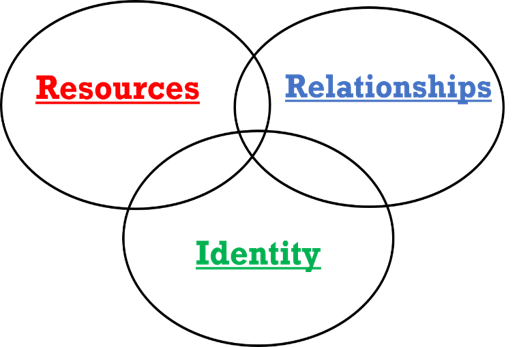
The overwhelming majority of people spoke about their families and the love of those closest to them. Relationships were the dominant answer to what was most important to people.
A number of other people also referred to their faith and also to having a sense of purpose and meaning in their lives.
It was a simple exercise which clearly evidenced the central importance of relationships and identity in our lives. It was significant that no one suggested that ‘resources’ were the most important thing.
Different values
The US writer David Brooks has highlighted the difference between two types of values that we live by:
‘Resume values’ are the abilities, accomplishments, and professional skills that help you succeed in the marketplace: technical expertise, leadership, efficiency, and awards. These are the traits that appear on your CV and emphasised in education and career development.
‘Eulogy values’ are the qualities that people remember about you at your funeral: kindness, honesty, compassion, courage, and the ability to form meaningful relationships. These values reflect your inner character and the impact you have on others’ lives, rather than external achievements.
The final analysis
What we share on our CVs often relate to how well we have managed or gained resources. But in the ‘final analysis’ this is not what those closest to us really care most about. Whoever hears anyone speak about someone’s the wealth or assets they have accumulated at a funeral? It simply does not happen.
And its because ultimately, these things do not matter as much as relationships.
In the brilliant book God of Surprises, the author Gerard Hughes, actually pre-empts this ‘end of life’ scenario by encouraging people to undertake the exercise of privately writing your own obituary. I would highly recommend it as an exercise to engage and reflect on your priorities and what you most want to be remembered for. See here: What would you include if you could write your own obituary?
Important to everyone
The main point I made in the seminar was that if these things are most important to us, then they are also most important to people experiencing homelessness. People who become homeless are not some special category of people – they are just like us – with the same hopes and dreams who have hit hard times.
What is important to us, is important to them.
Too often, we focus on resources because this address the obvious, external need but actually, what many people most need is healthy relationships and a stronger sense identity. How we hold these three needs to together is the key challenge.
Food as a basis
The resource of food is a great basis for building authentic relationships because the act of eating food together is such a precious opportunity for an engagement which is mutual and shared.
But social action volunteers often need to be encouraged not to ‘hide’ behind the distribution of resources through being too transactional or task-focussed. I have been to many drop-ins and church meals where the volunteers are busy and chatting energetically in the kitchen while many guests are sitting quiet and alone. People may leave with full stomachs, but have their hearts been affected by genuine engagement with another human?
Of course resources are vital – especially affordable accommodation. But if homelessness was simply a matter of distributing resources then it would be relatively easy to solve. But its not – home-lessness is more than house-lessness. Houses are key resources and we vitally need more – but homes are places of relationship and identity. And restoring and repairing broken relationships and damaged identities is a lot more complex.
The limitations of resources
The starkest example of this truth was the ‘Everyone In’ initiative during the pandemic that I worked on as a government rough sleeping adviser. As hotel rooms suddenly and unexpectedly became available, people who were homeless were offered rooms in these empty hotels. Much great work was achieved but what is often not less acknowledged to is that even with that offer over 2000 people remained on the streets.
This revealed the limitations of what resources can do when there is so much relational distrust and damaged identities among those you are seeking to help. We need people and approaches which build trusting relationships and thus enable people to engage with the resources offered and rebuild a more positive sense of identity and purpose.
What makes us human
The central importance of relationships cannot be overstated: relationships with others is what makes us human.
And Christians believe it is fundamental to how we are made: in the image of a God who is not a solitary being but a trinity of relationships. And God is not distant but has come to us in Jesus and longs to be in relationship with us all. And in John 14:23, Jesus puts this explicitly in terms of making a home with us:
“Anyone who loves me will obey my teaching. My Father will love them, and we will come to them and make our home with them.”
Discover more from Grace + Truth
Subscribe to get the latest posts sent to your email.


A Life spent mearly escaping ones self has never fully live. The Value of a life lived is not measured by the wealth it has accumulated but by authenticity, relationships and the meaning it creates.
LikeLiked by 1 person
thanks Chris. For the last 15 years I have greatly appreciated the authenticity of our relationship and the meaning it has created for me. Thanks mate!
LikeLike