
In times of explosive and frightening polarisation one can despair of finding common ground. I grew up in such a world, a teenager in the mid 1980s, at the height of the Cold War.
The US and the USSR held two competing ideologies, totally incomprehensible to each other. They were both armed to the hilt in an ever-escalating spiral, with seemingly zero interest in finding the common ground on which to base any sort of rapprochement.
But then common ground broke out. How?
Apocalypse
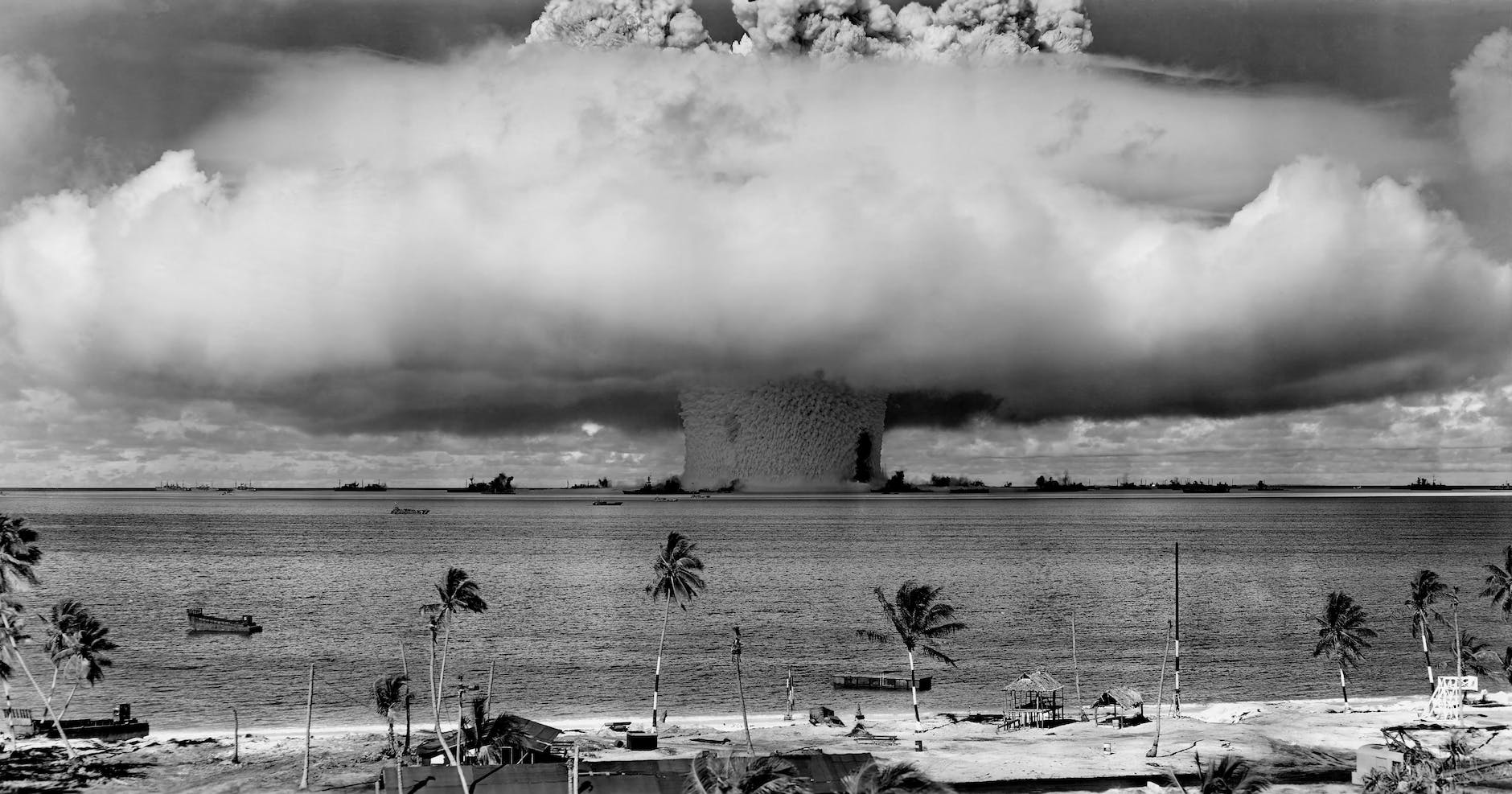
In the 1980s stories such as When the Wind Blows, and songs like 99 Red Balloons, which imagined a post-apocalyptic future, were popular not because they needed a leap of imagination, but because they didn’t. It was assumed that nuclear war, followed by nuclear winter, might happen as likely as not.
Being Britain, some people protested about this outside U.S. nuclear bases on our soil. But, also being Britain, more people just laughed about it.
Each Sunday night we tuned our TVs into the satirical-political-puppetry show, Spitting Image, to chuckle along to a never-ending parade of world leaders depicted at their most grotesque and extreme, but seemingly all too real.
One of the most vivid portrayals was of the senile, shambolic U.S. President, Ronald Reagan, always just one misstep away from ‘accidentally’ pushing the nuclear red button. Oh, how we laughed.
Disarmament debate
By 1987 I was at university. I went to a debate on Labour’s policy of unilateral nuclear disarmament; Kenneth Adelman, a leading national security adviser to Reagan, debated against the then Labour Shadow Defence Secretary. Everyone went into the room supporting the Labour policy – we were students after all. Very few people exited the room thinking that way.
Adelman produced a spectacular display of calm reasoning and argument which blew my mind. Then opened it. Then changed it. My overwhelming sense was one of disbelief. But also relief. Maybe people like this, not the crazy old puppet president, were actually running America. This wasn’t how Spitting Image had depicted the President’s ‘Four Horsemen of the Apocalypse’ advisers.
Part of the problem
Back then I still viewed President Reagan himself as part of the problem, not the solution. I did not appreciate how hard powerful leaders find it to listen to experts. Spitting Image repeatedly told us the President had a brain the size of a pea. But maybe his background as an actor made him less precious about what he knew, and didn’t know; he realised he must surround himself with, and listen to, experts.
And there was something else about the President; a geniality and warmth, which began to melt the Cold War. Again, being an actor rather than a career politician perhaps provided a better schooling for personally connecting with people through humour. His jokes were empathetic, poking fun at the Soviet system while siding with the Russian people. The most celebrated example is his ‘ordering of a new car’ joke told to an audience of U.S. car workers. And if you want to know why the world did not end in the 1980s, you could do worse than watch this clip.
Shared endeavour
In just a few years the world had turned upside down. From the bitterest of enemies, Reagan’s shtick now sounded more like a shared endeavour of how to help Soviet President Gorbachev reform his country for the benefit of the plucky Soviet people. How did this happen?
We will never know it all. But, after Reagan’s death, Gorbachev revealed a fascinating further snippet that happened during the 1985 Lake Geneva summit, at the height of the Cold War tensions. The two presidents, taking a break from negotiations, walked off together without advisers, alone save for their interpreters, to a nearby cabin in the woods. According to Gorbachev it was then that Reagan asked him:
‘What would you do if the United States were suddenly attacked by someone from outer space? Would you help us?’
To which Gorbachev responded:
‘No doubt about it’.
Reagan said ‘We too’.
One single thing
It may be that, as suggested by the interpretation of this exchange in the Smithsonian Magazine, this was simply crazy Spitting Image-style Reagan talking, fixated with science fiction. But surely a more likely explanation is that the unconventional U.S. President was alighting on the one single thing he could think of that, at that moment of total distrust and diametrically opposed worldviews, could possibly unify the interests of the U.S. and the Soviet Union.
That he was conjuring, literally out of thin air, the only possible tiniest of desert islands of common ground imaginable. Just so as to make each other think, to pause for a moment, at the cabin in the woods, out of earshot of advisers, to reflect that yes, they did in fact have something, a shared humanity, in common. And we know that Gorbachev laughed. And that history began to change its course.
As a result, I survived the 1980s, and am still here. But we now seem right back in times crying out once again for that mastery of the art of conjuring common ground out of thin air. We have seen it before, we can see it again.
Jonathan Thomas is a Senior Fellow responsible for immigration policy at the Social Market Foundation think tank.
Discover more from Grace + Truth
Subscribe to get the latest posts sent to your email.

 Grace + Truth
Thank you, Jonathon. I’ve got tears in my eyes. That has filled me so full of hope, and also made me remember there is so much going on that I don’t know. As I read somewhere else this morning “we need to remember that God is still in charge”. Thank you X
LikeLike