These reflections were stirred afresh at the Hope into Action annual conference, Rooted: Homelessness Ends in Community and in particular during the seminar Rethinking Poverty and Our Response facilitated by Jon Kuhrt and Rachel Arnold.
There is a kind of Christianity that excels at projects.
The foodbank is organised, the referrals are done, the safeguarding structures are in place, and the church becomes increasingly competent at delivering social action – sometimes directly, sometimes by hosting charities and functioning as a volunteer base for wider community initiatives.
Much of this work is deeply good and necessary. In the middle of austerity, rising poverty, broken housing systems, addiction, and overwhelmed public services, churches have often stepped into the gap with real compassion and sacrifice.
But I sometimes wonder whether parts of the church have quietly drifted into a very different imagination of what Christian community is meant to be.
I sometimes describe this shift as counter Christianity. And I mean counter in two senses.
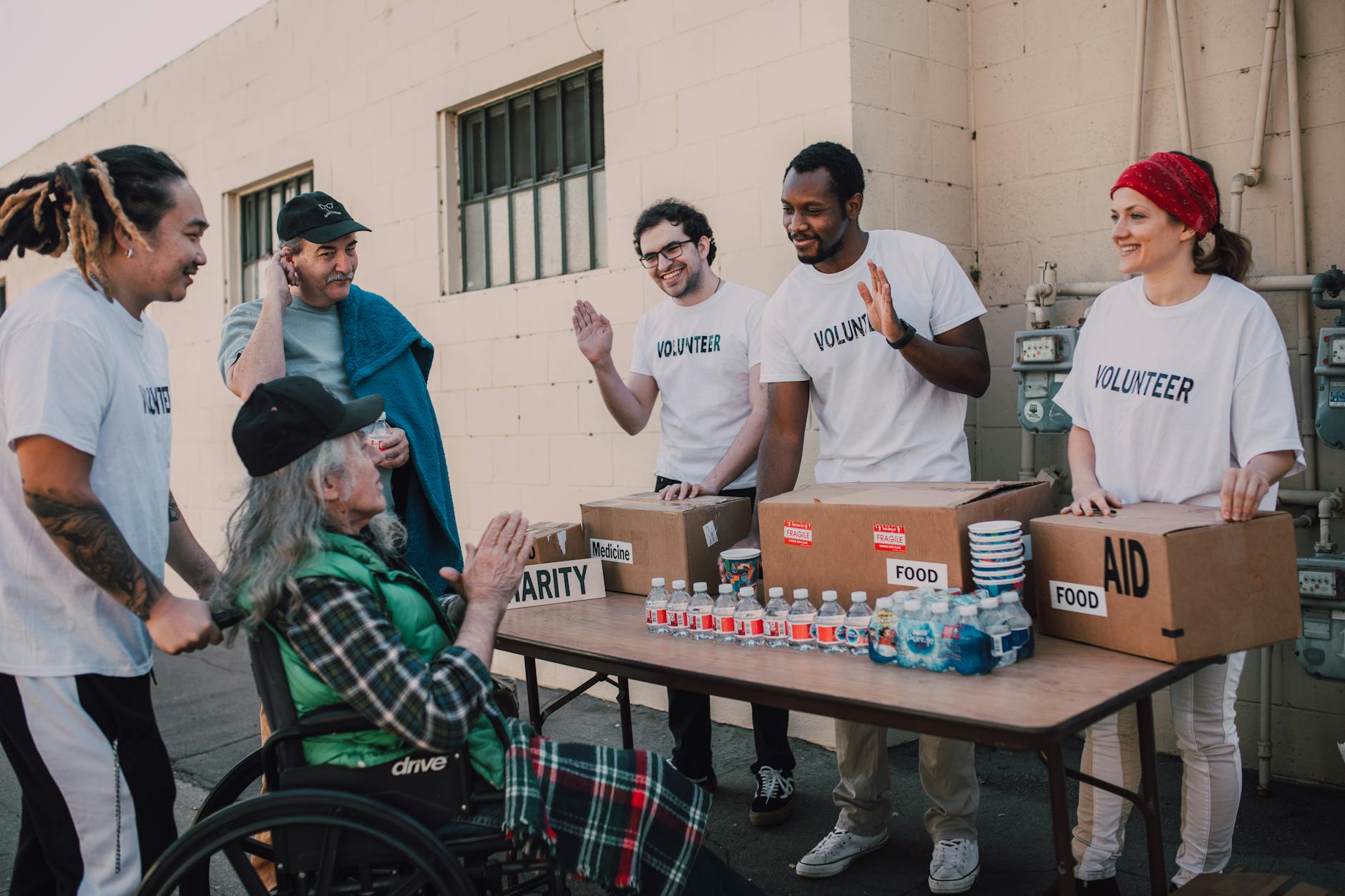
A counter is the place where things are handed over: food parcels, vouchers, forms, advice. A transaction takes place. Need is met, help is given, and then the interaction ends.
But the counter is also the thing standing between the Christian and the person receiving help. It creates distance and establishes roles. One person becomes the helper. The other becomes the helped. One remains named and capable; the other slowly risks being reduced to need.
Client. Service user. The vulnerable. The homeless. The addict.
Language shapes imagination. Unless we are careful, the church can slowly begin to mirror the logic of institutions more than the logic of the kingdom of God. The poor are welcomed, but often mainly as recipients. Present, but still somehow peripheral. In the room, but rarely shaping the room.
As churches increasingly organise around social action, deeper questions around relationship, power, and belonging become more important, not less. Jon Kuhrt has warned that the church can become little more than a handmaiden to the state, plugging gaps left by austerity, welfare cuts, and collapsing social care – endlessly managing social pain without ever asking why so many people are bleeding in the first place.
And as Rachel Arnold observed, we collect donations from supermarkets for our foodbanks while often saying very little about the economic systems underneath them – systems where profits flow upwards to shareholders even as jobs quietly disappear through self-checkouts and automation.
Dependency can quietly form inside church projects in ways nobody intended – and not simply material dependency, but relational dependency. The church can unconsciously create a permanent divide between those who help and those who are helped. People may receive support for years without ever fully becoming participants in the life of the community – contributors, friends, decision-makers, or family within the church itself.
And yet the gospel keeps disrupting those categories.
In the kingdom of God, the poor are not merely objects of compassion or recipients of ministry. They are bearers of the image of God. Friends. Brothers. Sisters. People with gifts, wisdom, humour, resilience, and prophetic voices the wider church desperately needs.
I lead Lighthouse — a church and Christian community gathering in a café-style space inside a homeless shelter in Leeds, and throughout the week across six locations. Working closely among people on the margins has made me think deeply about what Christian community actually is, and what happens when social action becomes separated from shared life.
At Lighthouse we try not to call people ‘clients’ or ‘service users’. Not because language magically fixes everything, but because words reveal what kind of community we think we are building. A client receives a service. A brother or sister belongs.
None of this means projects are bad. Projects matter. Structures matter. Safeguarding matters. Foodbanks matter. And the counter is sometimes necessary.
The point is that social action on its own is not yet the fullness of the church’s calling. The church is not simply called to run compassionate initiatives for people, but to become a people among whom strangers slowly become family — a community of covenant and kinship.
Because people are not projects. They are image bearers. Friends. Brothers and sisters.
Perhaps this is part of what the New Testament means by koinonia.
At the end of Lighthouse Sundays, somewhere between washing the pots and cleaning the toilets, we say the grace together in a circle with our eyes open — what we jokingly call “holy eyeballing.”
“May the grace of the Lord Jesus Christ, and the love of God, and the fellowship of the Holy Spirit be with us all.”
That word “fellowship” is koinonia. More than friendliness or hospitality. It is shared participation in the life of God through the Holy Spirit – a communion rooted in Christ himself. The Holy Spirit knitting people together through mercy, prayer, burden-bearing, forgiveness, and love.
Some of the most important ministry at Lighthouse looks deeply ordinary. Playing dominoes. Banter. Singing “Happy Birthday” and eating cake. Making brews. Washing pots. Praying quietly with somebody carrying grief in their bones. Noticing when somebody disappears. Small things. But holy things.
I remember one afternoon when a man who had first come to Lighthouse needing support ended up sitting quietly praying with somebody else who was falling apart. Nobody had organised it. No programme had produced it. It simply emerged from life together.
Last year, a member of our community – who had previously been living in a car park – prayed for a visiting theologian and for a priest accompanying her, asking healing for his chronic pain. There was something deeply beautiful about it all. The one once dismissed as broken becoming the one who ministers. The vulnerable becoming the vessel of grace.
Jesus did not remain at a safe professional distance from suffering. Again and again in the Gospels, he eats with people – tax collectors, sinners, the poor, outcasts, and those respectable religion preferred at a distance. Around tables, social boundaries begin to collapse.
The early church understood something many modern churches have forgotten. Acts describes believers devoted to “the fellowship (koinonia), to the breaking of bread and the prayers.” Resources were shared. Burdens were carried together. That is not simply charity. It is common life.
Once the poor are no longer “them” but part of “us,” suffering can no longer remain abstract. Once you know people, eat with people, love people, and bury people, the pain stops being theoretical. The church is no longer advocating for outsiders from a safe moral distance. We are speaking about our friends. Our brothers. Our sisters.
The kingdom of God seems to move against isolation. Towards communion. Towards common life. Towards tables rather than counters.
Maybe the kingdom of God does not always look impressive. Sometimes it looks like wounded people refusing to leave one another alone. Sometimes it looks like somebody making tea while another person cries quietly at the table. Sometimes it looks like bread broken among people who know they need mercy.
In a fragmented world, perhaps one of the most prophetic things the church can become is a people who refuse isolation, refuse disposability, and refuse to leave one another alone.
Not on the safe side of the counter, but around tables where lives are slowly being knitted together in love.
This is an abridged version of Jon Swales’ original article: Counter Christianity and Koinonia: Rethinking Church Social Action
The seminar was part of the Crossroads Initiative: discerning the future of Christian social action
Discover more from Grace + Truth
Subscribe to get the latest posts sent to your email.


This is beautiful Jon. That simple phrase, “tables rather than counters” brought tears to my eyes. You speak here of a radical fellowship, so absent in today’s world, and so needed. It is good to read of its existence.
LikeLike