Everyone loves wallowing in nostalgia. And recently I was commissioned to write the story of the last 30 years of immigration in the UK.
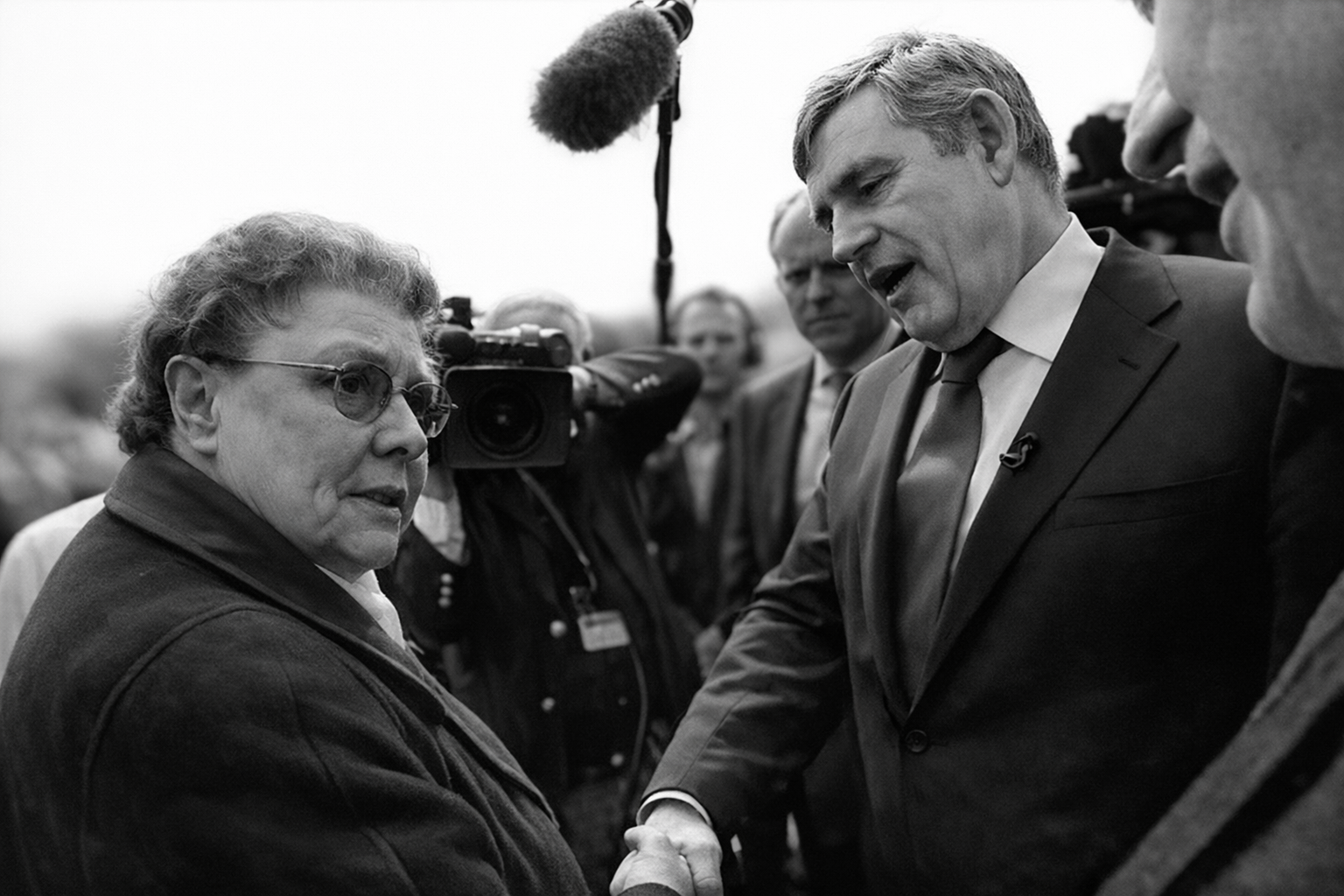
This was a period dominated at its outset by an era of expansive immigration policy under New Labour. It was an era effectively ended with Gordon Brown’s encounter with Gillian Duffy on the streets of Rochdale on the eve of the 2010 election.
‘A bigoted woman’
When Ms Duffy started to ask the Prime Minister about the large numbers recently arrived from Eastern Europe, he deflected her question. After saying their goodbyes, forgetting he still had on the Sky News microphone, he referred to her as “just a sort of bigoted woman”, intimating this was because she had questioned him about immigration.
For those concerned that even raising this issue condemned them as contemptible in the eyes of the ‘governing class’, it is hard to think of a moment that could have better confirmed this. The rest is history.
No Brexit?
If Gordon Brown had not encountered Ms Duffy that morning, maybe he would have won the 2010 election. And then…no Prime Minister Cameron, no net migration target continually missed, no boost for Farage, no pledge of an ‘in-out EU Referendum’ to head him off, no Brexit…
That’s some political impact for a retired council worker in a left behind town, just popping out for a loaf of bread.
‘A harbinger from the future’
Regardless of what one considers her place in history though, reading the transcript of her exchange with the PM that day in April 2010 one is struck by how much it foretold. Looking back ten years later, for one leading commentator “Ms Duffy turned out to have been a harbinger from the future”.
The feeling that a growing number of places, and people in those places, aren’t benefiting any more from the ‘system’, and that the country’s political leaders don’t realise this, or, even worse, don’t care, was to be a driving dynamic behind both the Brexit vote, and the populist surge that has now followed it.
When the PM sets out to assure Ms Duffy of the action the government are taking to improve health care, the police, and schools, she simply responds:
“I don’t think it’s happening in Rochdale…”
Truth to power
For those looking for lessons on speaking truth to power, Ms Duffy provided them in spades. Her opening gambit:
“My family have voted Labour all their lives. My father, even, when he was in his teens, went to Free Trade Hall to sing “The Red Flag”. And now I’m absolutely ashamed of saying I’m Labour.”
Her approach challenging but respectful. Her tone as if chiding an errant son who has deserted those closest to him, but whom deep down she still loves. She seems to be wanting, hoping, for the PM to win her over, but genuinely concerned he is in too deep.
“But how are you going to get us out of all this debt, Gordon?”
Immigration
Only once she has meandered through her personal problems with tax, pensions and benefits does she get on to immigration:
Ms Duffy: “You can’t say anything about the immigrants because you’re saying that you’re… but all these eastern Europeans what are coming in, where are they flocking from?”
Prime Minister: “A million people have come from Europe, but a million British people have gone into Europe. You do know that there’s a lot of British people staying in Europe as well.”
That’s the extent of their exchange about immigration. So little, yet so much.
Textbook politician
The PM’s response was textbook politician. Ignore the underlying implication of a question and make the point you want to make.
And textbook New Labour policy. Many people had concerns about the impact on their communities of globalisation and immigration. New Labour, though, saw those forces as not only inevitable, but to be revelled in, an opportunity for the country, not a threat. It was this worldview the PM sought to communicate to Ms Duffy.
From the vantage point of the Rochdale streets however, this perspective likely seemed from a different world.
Serious politician
Many today bemoan the ‘fact’ that voters are being ‘duped’ into supporting politicians who are ‘unserious’ and don’t have their best interests at heart.
Gordon Brown was as serious a politician as they come. He had many people’s best interests at heart. His exchange with Ms Duffy proves it. Ever professional in his patient responses to her rambling questioning, he comfortably ‘won’ the debate, and then politely asked after her grandchildren. A satisfactory morning’s work one might think.
But he tragically lost the aftermath. They parted on seemingly amicable terms. Certainly, Ms Duffy thought so. But the PM was in a foul mood.
Duped
“You can’t say anything about immigrants” she had said.
His post-interview slur against her confirmed that. Like an errant son, he had shown concern to her face, but it was clear he hadn’t meant it. It felt like she had been duped.
Confronted with the recording of him calling her a bigot behind her back, she was flabbergasted. He sought her out to apologise. But while you can apologise to a person, people as a whole are less forgiving, and many people had heard what he had said into that mic, and how he had said it.
To many of them this was a wake-up call. Things were about to change.
Jonathan Thomas is a Senior Fellow responsible for immigration policy at the Social Market Foundation think tank. Read his publication Brexit and Immigration: the Arc of the Pendulum
Discover more from Grace + Truth
Subscribe to get the latest posts sent to your email.

 Grace + Truth