
Tough messages are not shared easily. It’s one of the key themes of this blog. If it doesn’t challenge you, then it doesn’t change you.
But, let’s be honest, we all prefer easy forms of grace than tough messages of truth. And if this is true for individuals, then it’s even more so for organisations.
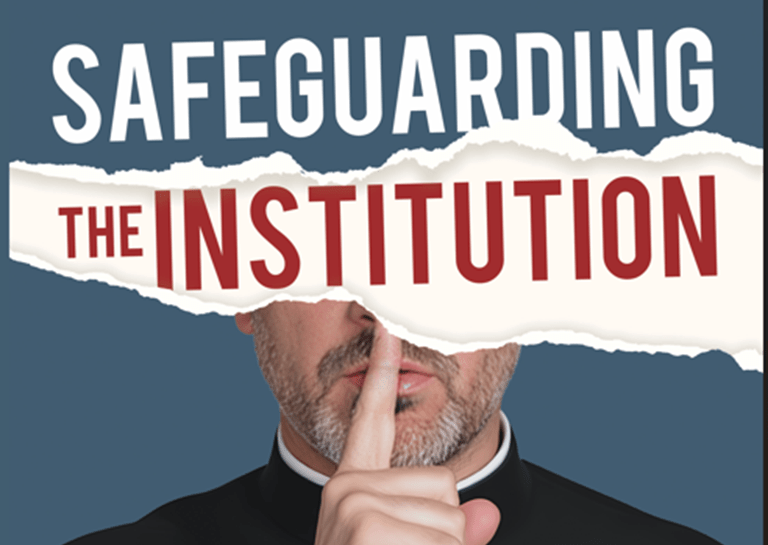
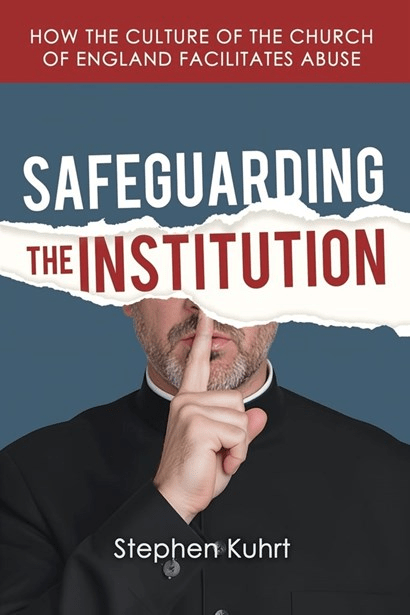
And this has been the case for the journey of my brother Stephen Kuhrt’s book Safeguarding the Institution. Its core message is uncomfortable because it’s a careful analysis of how the culture of the Church of England is its main barrier to safeguarding vulnerable people. It’s not a message many people want to hear.
Personal experience
And what makes it an unusual and compelling book is that is not written by someone who is simply disgruntled or disengaged.
In contrast, Stephen is a serving C of E vicar leading a vibrant and energetic church. He has combined his personal experience of dealing with abuse within his church, along with his historical and theological analysis to make a critical appraisal of the institution he is working within.
Nervous
Despite having published two previous books, Stephen found many Christian publishers too nervous to take on a book which is so forthright and honest.
A prominent publisher he had previously written for didn’t even want to read the manuscript before this decision. Another was keen to publish the book but only if all of its elements of personal experience were removed. A third appeared keen and signed a contract with Stephen only to suddenly withdraw when nerves seemed to overcome the editor. There was something of the ‘parable of the sower’ about the journey.
And all this all happened during a time when safeguarding has continued to be a huge issue. Last year, of course, it was safeguarding failures that led to the first ever resignation of a serving Archbishop of Canterbury.
Reluctance to engage
And now it is published, some notable Christian websites, blogs and publications have been reluctant to review or engage with the book.
Some of this is due to nervousness, but another issue is the tribalism within the C of E. Often, the narrow concerns of warring ‘constituencies’ within the C of E mean that safeguarding scandals have been used as little more than point-scoring exercises in the internecine conflict. The civil war takes precedence over calls to establish a more truthful culture.
Church Times review
So for these reasons, I was very pleased to see the Church Times publish a review of the book last week. The review is written by Dr. Sue Atkinson, a wise and experienced voice who has written extensively on abuse and forgiveness.
Her review opens with this question:
“WHY is it that report after report comes out declaring that C of E responses to safeguarding are catastrophically awful? Why can’t we do better than that, and respond well to survivors of abuse as well as keep people safe?”
Invested in untruth
And then summarises starkly the thrust of the book’s argument:
“Stephen Kuhrt’s controversial book gives one main reason: C of E culture is utterly invested in “untruth and injustice”. That is a startling thing to say, but I am convinced he’s right: “untruth”, because the Church shies away from addressing difficult issues, instead engaging in passive aggressive behaviour to keep the well-being of the Church as the focus; and “injustice” because survivors struggle to get justice.”
She references his experience and his analysis:
“Kuhrt, a vicar in south London, has huge experience in dealing with safeguarding problems in his parish ministry, and these form the core of this well-argued book and give it credibility.
Kuhrt argues that the culture of the Church over the centuries has had many influences, such as the rather negative stiff upper lip of English public schools, which is so obviously present in the “Don’t rock the boat” attitude…especially when there is a prevailing influence of denial and passive aggression.”
Assessing culture
It is not good enough for report after report to produce detailed exposes of poor process, a lack of training or procedural failure. Rather, the C of E needs to step back and assess the culture within which all this is happening.
And this is what Safeguarding the Institution does. As Atkinson puts it:
“That should ring alarm bells in every member of the C of E. Deference and refusal to listen and engage with safeguarding concerns just end in cover-ups and no truth and justice.”
‘This prophetic book’
And she ends her review with this remarkable endorsement:
“This compelling book would have got my vote for Christian book of the year, and it gives me hope that the toxicity of C of E safeguarding can be rescued by the hard work of challenging the status quo. Change is needed in many areas, from the way in which we train curates to dismantling cultures of “wilful incompetence, manipulation and passive aggression.
For some, Kuhrt’s message of root-and-branch reform is going to be uncomfortable, but I urge them to read this prophetic book.”
Read the full review: Safeguarding the Institution: Church Times review
Dr Sue Atkinson is the author of Struggling to Forgive and editor of free downloadable leaflets about abuse: survivorsvoices.org
Watch Stephen’s recent interview with Sam Howson on the themes of his book:
Discover more from Grace + Truth
Subscribe to get the latest posts sent to your email.

 Grace + Truth
Oh wow! Thanks for this review. Raw. Much needed. If it doesn’t challenge us, it doesn’t change us, as you say.
LikeLike
Unfortunately we’re dealing with similar things here in the Anglican Church in Wales 😦
LikeLike
Unfortunately we’re dealing with similar things here in the Anglican Church in Wales 😦
LikeLike
Very grateful that you have written this book, Stephen, and look forward to reading it. Am still deeply troubled by the way in which you have been treated by safeguarding in Southwark Diocese, and the Bishop. Bernard Randall in Derby has endured the same Diocesan self-protection and compromise. A lack of humanity, let alone Christ-likeness. Praise God that you have pressed on so faithfully and fruitfully in ministry, Stephen.
LikeLike